
Table of Contents
Some links on The Justifiable are affiliate links, meaning we may earn a small commission at no extra cost to you. Read full disclaimer.
Starting your dropshipping guide journey can feel both exciting and overwhelming.
You’ve seen success stories online, but what separates a store that actually sells from one that never gets off the ground? Is it the products, the branding, or something deeper in the strategy?
In this guide, I’ll walk you through how to build a dropshipping store that stands out, attracts real customers, and consistently makes sales—without the fluff or recycled advice.
Understanding The Dropshipping Model Inside Out
Before jumping into products or platforms, it’s crucial to really understand how dropshipping works.
Once you grasp how the system flows—between suppliers, stores, and customers—you’ll start making smarter, more profitable decisions.
How Dropshipping Actually Works In Practice
In simple terms, dropshipping means you sell products without ever touching inventory yourself. You act as the middle point between a supplier and a buyer. When someone places an order on your website:
- Customer orders from your store – For example, a customer buys a “self-cleaning water bottle” from your Shopify store.
- You forward that order to your supplier – You use a platform like AliExpress, CJ Dropshipping, or Spocket to fulfill the order automatically or manually.
- Supplier ships directly to the customer – The supplier packages and ships it to the customer’s address, often with your branding on the packaging if you’ve arranged private labeling.
Here’s a simple example of a UI flow: Shopify Dashboard → Orders → Fulfill with DSers (AliExpress integration).
The beauty here is low upfront investment—you don’t need to buy inventory until someone actually pays you.
But the challenge is balancing profit margin (the difference between your selling price and supplier cost) with customer experience (shipping times, product quality, and reliability).
Common Myths About Dropshipping That Kill Motivation
There’s a ton of hype around dropshipping, which leads to dangerous misconceptions.
Let’s clear a few up:
- Myth 1: Dropshipping is quick money. In reality, it’s a long-term business model. It might take weeks or months to test and refine your store before you see consistent profit.
- Myth 2: You can sell anything and succeed. That’s not true anymore. Market saturation is real, and picking random trending items without research is like playing roulette.
- Myth 3: You don’t need customer service. You absolutely do. Customer communication can make or break your reputation—especially since delivery times are often longer.
I’ve seen beginners burn out because they expected easy money. The ones who last are the ones who treat dropshipping as a real business, not a shortcut.
Why Most Beginners Fail And How To Avoid Their Mistakes
I’ve noticed three main reasons beginners fail—and none of them have to do with luck.
- Poor Product Research: Most people pick products based on what “looks cool” instead of what solves a problem. Use data-driven tools like Sell The Trend or Minea to identify products with strong demand, steady interest, and proven sales.
- Weak Brand Positioning: A generic store with random items looks cheap. I recommend focusing on a themed niche store—like pet grooming tools or minimalist home decor—so visitors instantly understand your offer.
- No Focus on Customer Experience: From slow shipping to bad copywriting, these issues kill conversion rates fast. Always test your order flow yourself to catch friction points before customers do.
To avoid these pitfalls, think long-term: research carefully, communicate clearly, and refine constantly. That mindset turns your dropshipping hustle into a sustainable business.
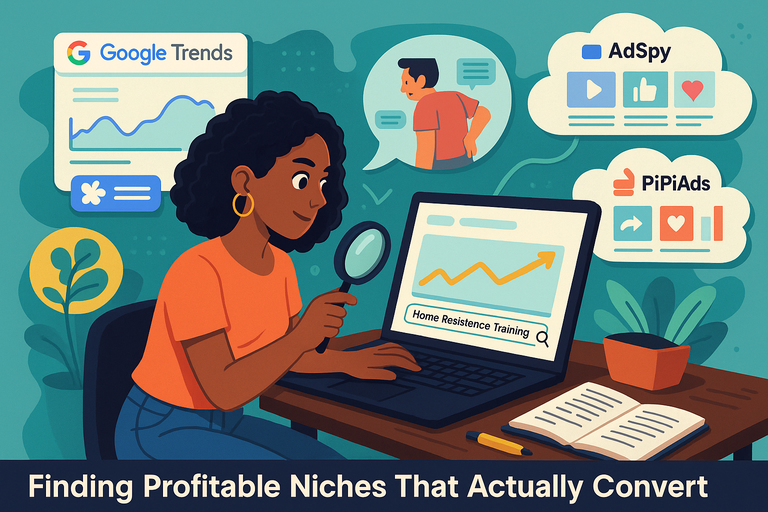
Finding Profitable Niches That Actually Convert
Choosing the right niche is the foundation of your success.
It’s not just about finding something that sells—it’s about finding something that sells to the right audience with consistent intent to buy.
How To Identify Niche Markets With Real Buyer Intent
The difference between a good niche and a bad one lies in buyer intent. You want a niche where people aren’t just browsing—they’re actively searching for solutions.
Here’s how to find those:
- Look for pain points: Products that solve frustrations (like back pain, pet hair mess, or posture problems) sell better because they solve a problem.
- Check consistent interest: Use Google Trends to ensure demand stays stable throughout the year. Seasonal spikes can hurt your cash flow.
- Study forums and communities: Sites like Reddit can help you understand what problems people are discussing—this reveals valuable niche ideas.
Example: Instead of “fitness,” which is too broad, focus on “home resistance training for busy professionals.” It’s specific, solution-oriented, and easier to target with ads.
Tools And Methods For Validating Niche Profitability
Once you’ve spotted potential niches, validate them before investing time and money.
- Product Research Tools:
- AdSpy – Let you analyze trending ads on Facebook and TikTok. If many ads are running for similar products, there’s proof of demand.
- Google Keyword Planner – Helps you see search volume and competition level for niche keywords.
- Competitor Research: Visit top stores in your niche on SimilarWeb. Look at their best-selling products, ad creatives, and estimated traffic sources.
- Profitability Formula: Check if you can price the product at least 3x its sourcing cost. For instance, if it costs $10 on AliExpress, you should be able to sell it for $30 or more after accounting for shipping and ad spend.
I always suggest starting small—test a few items with $100 in ad spend to gauge traction before scaling.
The Psychology Of Choosing Products People Crave
The most successful products don’t just meet needs—they trigger emotions. Buyers often make decisions emotionally, then justify them logically afterward.
Here’s what works psychologically:
- Instant Gratification: Products that show quick results or offer convenience (like posture correctors or portable blenders).
- Status Appeal: Items that make the buyer feel part of a trend or lifestyle (like aesthetic LED lamps or minimalist phone cases).
- Curiosity Factor: Unique products that make people pause and think, “Wow, that’s clever!” often outperform traditional items.
I’ve seen stores triple their conversion rates just by switching from generic “nice-to-have” items to products that spark desire or solve pain instantly.
Pro Insight: Don’t chase random viral items—build your brand around a niche that excites you. When you believe in what you sell, your marketing becomes more authentic, and customers feel that energy.
Selecting Winning Products With Consistent Demand
Finding the right products to sell can make or break your dropshipping business.
This step isn’t about guessing—it’s about using data, intuition, and real-world testing to identify items that not only sell once but continue generating sales month after month.
Proven Product Research Strategies For 2025
The dropshipping landscape keeps evolving, and what worked a few years ago doesn’t always hold up today. In 2025, success depends on combining trend analysis with buyer psychology and supplier insights.
Here’s a simple framework I use:
- Check trend consistency: Use Google Trends to ensure interest in your product is stable or growing. For example, a search for “portable blender” shows steady year-round demand, making it a safer choice than a viral gadget that spikes once and fades.
- Analyze ad activity: Tools like PiPiAds let you monitor running Facebook and TikTok ads. If a product has multiple advertisers spending for months, that’s strong evidence of consistent ROI (return on investment).
- Reverse engineer competitors: Visit high-performing Shopify stores using Shopify Inspector to see their best sellers and ad traffic sources. It helps you identify evergreen products hiding in plain sight.
- Validate engagement: Use TikTok’s search bar (for example, type “TikTok made me buy it + product name”). If the tag has millions of views and comments about people actually buying, you’re onto something real.
I personally recommend starting with 3–5 product ideas and running small ad tests. That way, you can see which one gets traction before scaling up.
Evaluating Supplier Reliability And Shipping Times
You can have the best product idea in the world, but if your supplier messes up—slow shipping, poor packaging, or inconsistent stock—you’ll lose trust fast.
Here’s how I evaluate suppliers before committing:
- Check supplier ratings: On platforms like CJ Dropshipping, look for suppliers with at least 4.7/5 ratings and over 300 orders on the specific item.
- Communicate directly: Message the supplier before you start selling. Ask for product images, real videos, and fulfillment speed. How they respond tells you everything about professionalism.
- Compare fulfillment times: For example, in CJ Dropshipping → Product Page → Shipping Method → Estimated Delivery, you can quickly check timelines to different countries. I prefer suppliers that can deliver within 10–15 days to the U.S. or U.K.
- Order samples: I always suggest ordering the product yourself. This lets you check packaging quality, shipping accuracy, and product durability firsthand.
A reliable supplier is a long-term partner, not just a vendor. It’s worth investing the time to build that relationship early.
How To Test Products Before Going All In
Testing protects you from sinking money into a product that looks good on paper but flops in reality.
Here’s my testing system:
- Create a simple, single-product landing page using Shopify.
- Run small ad campaigns on TikTok or Meta (Facebook + Instagram). Spend about $20–$30 per ad set for 2–3 days to gauge engagement (click-through rate above 2% is promising).
- Track metrics closely:
- CTR (Click-Through Rate): Shows how attractive your ad is.
- CPC (Cost Per Click): Reveals ad efficiency.
- ATC (Add to Cart): Indicates product interest.
- Gather customer feedback: Send test products to a few early customers or influencers. Ask for honest reviews on packaging, usability, and quality.
Once you find a product with strong engagement and good reviews, it’s worth scaling. The key is patience—most “winning” products take multiple small tests to reveal themselves.
Building A Store That Looks Professional And Converts
Your store is your digital storefront. A professional look instantly communicates trust and credibility, which directly impacts sales.
Even great products fail when the store feels cluttered or amateurish.
Choosing The Right Ecommerce Platform (Shopify, WooCommerce, Or Others)
Each platform has its strengths, so choose one that fits your comfort level and business goals.
- Shopify: The easiest for beginners. It handles hosting, security, and integrations with apps like DSers or CJ Dropshipping. Example UI path: Shopify Dashboard → Apps → DSers → Import Products.
- WooCommerce: Perfect if you already use WordPress and want more control over customization and costs.
- BigCommerce / Wix: Good for scaling or when you want built-in SEO and simple templates.
I generally recommend Shopify for new dropshippers because it’s fast, reliable, and supported by a huge ecosystem of apps that automate fulfillment and analytics.
Crafting Product Pages That Build Trust And Urgency
Your product page should guide visitors toward clicking “Buy Now” without feeling forced.
Here’s a structure that works:
- High-quality images: Use real product photos (preferably from your test orders). Avoid stock photos—they look fake and reduce trust.
- Clear pricing: Show total cost upfront, including shipping if possible. Hidden fees destroy trust.
- Scarcity and urgency cues: Use apps like Countdown Timer Bar sparingly to create urgency. A simple “Only 5 left in stock” message can increase conversions by up to 14%.
- Visible guarantees: A short line like “30-Day Money Back Guarantee” near the add-to-cart button reassures customers.
I also suggest keeping your product page layout clean: one column, centered product image, and clear call-to-action buttons.
Optimizing Store Design For Conversion And User Experience
Good design isn’t about fancy visuals—it’s about usability. If your visitor can’t find what they need within three seconds, they’ll leave.
Quick optimization checklist:
- Use simple, readable fonts like Poppins or Lato.
- Stick to two colors maximum—your brand color and a neutral tone.
- Place Buy Now buttons above the fold.
- Add trust badges near the cart section to reinforce credibility.
For analytics, integrate Hotjar to see heatmaps of user behavior. You’ll discover where people hesitate or drop off, then tweak accordingly.
Creating Compelling Product Descriptions That Sell
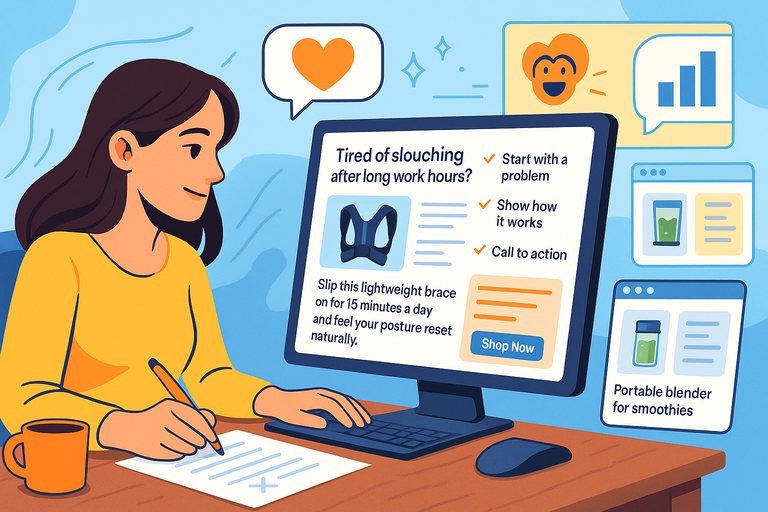
Product descriptions aren’t just text—they’re storytelling tools. They connect logic and emotion, helping people visualize how their lives improve with your product.
How To Write Copy That Converts Without Sounding Salesy
Instead of pushing people to buy, focus on helping them see the benefit.
Example structure:
- Start with a relatable problem.
- Introduce your product as the natural solution.
- Highlight how it works in simple terms.
- Finish with a small call to action.
For instance, instead of saying “This posture corrector improves your alignment,” say “Tired of slouching after long work hours? Slip this lightweight brace on for 15 minutes a day and feel your posture reset naturally.”
Simple, honest, and visual language wins.
Using Emotional Triggers To Influence Buying Decisions
Emotion drives most online purchases. When you understand what your audience feels, your copy resonates more deeply.
- Fear of missing out: Limited stock or time-sensitive offers.
- Desire for comfort or ease: Show how your product saves time or effort.
- Belonging: Connect to lifestyle or identity, like “Join thousands of pet lovers who swear by this tool.”
I advise balancing emotion with clarity. Too much hype feels fake; genuine empathy converts better.
Examples Of Product Descriptions That Outperform Average Stores
Here’s a quick comparison of what works and what doesn’t:
| Type | Average Description | High-Converting Description |
| Product | “Portable blender for smoothies.” | “Blend fresh smoothies anywhere—even in your car or office. Rechargeable, spill-proof, and powerful enough to crush ice in seconds.” |
| Product | “Pet grooming brush.” | “Keep your pet’s fur clean and mat-free in minutes. Gentle bristles remove shedding hair while giving your furry friend a relaxing massage.” |
Adding benefits, context, and emotional resonance makes a massive difference.
I’ve personally tested stores where rewriting product descriptions alone boosted conversions by over 20%. That’s the power of words that connect instead of just describe.
Pro Insight: Always read your product description out loud before publishing. If it sounds like something you’d never say to a friend, rewrite it. Natural, conversational copy builds trust—and trust sells.
Pricing Strategies That Maximize Profit Margins
Pricing is more than just adding a markup to your supplier’s cost—it’s a delicate balance between profitability and perceived value.
The right pricing strategy helps you attract customers, stay competitive, and sustain your dropshipping business long-term.
Understanding Psychological Pricing And Perceived Value
People rarely buy based on logic alone. Most purchasing decisions are emotional, and psychological pricing taps into that emotion. It’s the reason a $39.99 product feels more affordable than $40, even though there’s virtually no difference.
Here are a few psychological pricing techniques that work well in dropshipping:
- Charm pricing: Ending prices with .99 or .95 creates a perception of a deal. For instance, $29.99 feels significantly cheaper than $30.
- Price anchoring: Display a higher “original” price next to your sale price (e.g., ~$59.99~ $34.99). It immediately communicates savings.
- Bundle pricing: Combine complementary products, like a pet brush with a grooming glove, to increase average order value without raising individual prices.
- Prestige pricing: For high-quality or luxury items, round prices (e.g., $50 instead of $49.99) signal exclusivity and confidence.
I often tell new sellers: you’re not just selling an item—you’re selling a feeling of value. Your pricing should reflect both what the product is worth and how it makes customers feel about themselves when they buy it.
How To Set Competitive Yet Profitable Price Points
Finding that “sweet spot” between affordability and profit is both art and data. A common formula I use is:
Selling Price = Product Cost × 3
This gives enough margin to cover advertising, transaction fees, and potential refunds. But it’s not a one-size-fits-all rule.
You should consider:
- Market competition: Check how other stores price similar products. Tools like Koala Inspector show competitor pricing structures in seconds.
- Ad costs: If your Facebook ads cost $15 per conversion, your profit margin needs to comfortably absorb that.
- Customer expectations: Products under $50 often perform best with impulse buyers, while higher-end goods require stronger branding and storytelling.
A simple UI example for pricing adjustments: Shopify Dashboard → Products → Edit Product → Pricing Section. Here you can add “Compare at price” to visually show discounts.
I suggest testing multiple price points with small ad budgets. Sometimes, a $5 increase doesn’t hurt conversion but can boost profit per order significantly.
Avoiding Common Pricing Mistakes That Hurt Conversions
Even experienced dropshippers fall into pricing traps that eat into profit or scare off buyers.
- Underpricing for fear of losing sales: Setting prices too low might increase volume but often signals poor quality.
- Ignoring total costs: Always account for transaction fees, refunds, and ad spend before finalizing your selling price.
- Frequent discounting: Constant sales can make your brand feel desperate and train customers to wait for deals.
- Not adapting to currency differences: If you sell internationally, adjust prices for each market to maintain parity.
I believe it’s better to sell fewer items at healthy margins than chase volume with razor-thin profits. Sustainable pricing equals a sustainable business.
Driving Targeted Traffic To Your Store
You can have the perfect product and pricing, but without consistent traffic, your store won’t survive.
Driving targeted visitors—people who are actually interested in what you sell—is the real growth engine of dropshipping.
Free Vs Paid Traffic: What Works Best For Dropshipping
Both free and paid traffic can bring results, but each has a unique purpose.
Free traffic (organic methods):
- Content marketing: Write blog posts or guides that attract search traffic. For instance, if you sell posture correctors, post content like “Best Stretches For Back Pain Relief.”
- SEO: Optimize your product pages with relevant keywords and image alt text.
- Social media presence: Build a community around your niche through consistent posting and engagement.
Paid traffic:
- Facebook and Instagram ads: Great for fast testing and scaling.
- TikTok ads: Excellent for reaching Gen Z audiences with viral-style content.
- Google Shopping ads: Ideal for products people are already searching for.
I usually recommend starting with paid ads to get data fast, then layering free traffic methods for long-term stability.
Step-By-Step Facebook And Instagram Ad Strategy
Facebook and Instagram ads remain core traffic drivers for dropshipping. Here’s a practical approach that balances testing with scale:
- Create a Business Manager account: Go to business.facebook.com → Create Account.
- Install Meta Pixel: This tracks user actions on your store. You’ll find it under Shopify Dashboard → Facebook Sales Channel → Set Up Pixel.
- Ad testing phase: Run 3–5 ad variations with different creatives and audiences. Spend about $20–30 per ad set for 2–3 days.
- Analyze results: Focus on CTR (Click-Through Rate), CPM (Cost Per Thousand Impressions), and Add-To-Cart Rate.
- Scale winners: Once an ad performs well, increase the budget by 20–30% daily rather than doubling it overnight.
In my experience, video ads showcasing real product use outperform image ads by up to 40%. Keep videos short (10–20 seconds), with clear problem-solution storytelling.
Leveraging TikTok And Influencer Marketing For Explosive Growth
TikTok has reshaped dropshipping marketing. The platform rewards authenticity and creativity over polish.
Here’s how to leverage it effectively:
- Create organic-style videos: Don’t make ads look like ads. Use voiceovers, quick demos, or “before-and-after” clips.
- Use hashtags: Combine broad tags (#tiktokmademebuyit) with niche-specific ones (#petgroomingtools).
- Partner with micro-influencers: Influencers with 10K–50K followers often deliver better engagement than celebrities—and at a fraction of the cost.
- Track performance: Always provide influencers with a custom discount code (e.g., “SARAH10”) to track conversions easily.
I’ve seen stores explode from 0 to $10,000/month purely from TikTok virality when paired with smart retargeting ads. The trick is consistency—post daily, test multiple styles, and double down on what gets engagement.
Building Trust And Credibility With Your Audience

Trust is the real currency in dropshipping. Without it, even the best ad campaign will struggle to convert.
When customers feel confident in your brand, they’re not just buying a product—they’re buying reassurance.
How To Use Social Proof, Reviews, And Testimonials Effectively
People trust other people far more than they trust ads. That’s where social proof comes in.
- Add reviews with photos: Tools like Loox or Judge.me allow importing verified AliExpress reviews and collecting real ones.
- Highlight customer stories: Short quotes like “This gadget actually saved me 20 minutes every morning” work wonders.
- Display trust badges: Logos of payment methods (Visa, PayPal, etc.) subtly reassure customers.
- Leverage UGC (User-Generated Content): Reposting real customer photos or videos makes your brand relatable and authentic.
A quick Shopify setup path: Apps → Loox → Import Reviews → Product Page Widget Placement.
I always say—people don’t buy from the best store; they buy from the store they trust most.
Crafting A Transparent Brand Story That Builds Loyalty
A transparent brand story connects emotionally with your audience. It’s about showing the why behind your business.
You don’t need a dramatic backstory—just be genuine. For instance: “We started this store because we wanted eco-friendly kitchen tools that actually last.” Simple honesty beats corporate jargon every time.
Include your brand story on your About Us page, email footers, and even product packaging. It’s small touches like these that turn first-time buyers into repeat customers.
Handling Customer Support And Returns The Smart Way
Customer support isn’t a chore—it’s an opportunity to build lifetime loyalty.
Here’s how I approach it:
- Set clear policies: Outline returns, refunds, and shipping times clearly on your website. Transparency prevents disputes.
- Respond quickly: Aim to reply within 24 hours. Even a simple “We’re looking into this” helps maintain trust.
- Use helpdesk tools: Platforms like ManyChat or Tidio automate responses for common questions (like “Where’s my order?”).
- Turn complaints into wins: Offer replacements or discounts instead of refunds when possible. A well-handled issue often earns a loyal fan.
In my experience, great customer support is the cheapest form of marketing. A happy customer shares their experience, often bringing in new ones for free.
Pro Insight: In dropshipping, trust and traffic work hand in hand. You can drive thousands of visitors, but if your pricing, design, or communication feels off, they won’t convert. The moment you treat your store as a brand, not just a sales funnel, everything changes—the profits, the reputation, and your peace of mind.
Automating And Scaling Your Dropshipping Business
Once your store starts getting consistent sales, your next challenge is scaling without burning out. Automation is how you move from working in your business to working on it.
The goal is simple: let technology and systems handle the routine so you can focus on growth and strategy.
Essential Tools To Automate Fulfillment And Marketing
Automation is the secret weapon of every profitable dropshipping store. It eliminates repetitive tasks like processing orders, managing inventory, or sending customer emails.
Here are tools I personally recommend:
- DSers (for fulfillment): It automatically syncs orders from Shopify to AliExpress. Example UI path: Shopify Dashboard → Apps → DSers → Orders → Fulfill All. This saves hours every week.
- AutoDS: Handles everything from price monitoring to inventory updates. It even adjusts prices automatically when your supplier changes theirs.
- Klaviyo (for email automation): Lets you send pre-scheduled sequences—like welcome series, abandoned cart reminders, and thank-you emails.
- Zapier: Connects multiple apps. For example, you can trigger a Slack message whenever a high-ticket order comes in.
- Meta Ads Automation Rules: Within Ads Manager → Automated Rules, set actions like “Pause Ad if Cost per Result > $10.”
I suggest starting with fulfillment automation first, then adding marketing tools as sales grow. It’s better to automate progressively than all at once—you’ll understand each tool better that way.
How To Outsource Tasks Without Losing Quality
As orders grow, you’ll quickly realize you can’t do everything yourself. Outsourcing lets you delegate while keeping quality intact.
Here’s what to outsource first:
- Customer service: Hire virtual assistants (VAs) through platforms like Upwork. Provide them with canned responses and access to tools like Gorgias for managing tickets.
- Order fulfillment oversight: A fulfillment VA can handle supplier communication and order tracking.
- Creative work: Freelancers can design ad creatives, product photos, or landing pages. I recommend Fiverr Pro for trustworthy talent.
Pro tip: Create Standard Operating Procedures (SOPs) before you delegate. Record short Loom videos explaining tasks (for example, “How to process a refund in Shopify”). This ensures new team members can onboard quickly without repeated training.
Scaling Strategies For Long-Term Profit And Sustainability
Scaling isn’t just about selling more—it’s about growing smarter. I believe true scalability comes from optimizing three key areas: traffic, conversions, and retention.
- Traffic scaling: Increase your ad budget gradually (20–30% daily). Add new channels like Pinterest or Google Shopping once your core ads stabilize.
- Conversion optimization: Use A/B testing on landing pages with tools like VWO. Even small improvements in button placement or headlines can lift sales dramatically.
- Customer retention: Introduce loyalty programs or cross-sell through email. For example, after a customer buys a posture corrector, offer them a neck massager at a discount.
A scalable store runs like a machine—automated, data-driven, and always testing for improvement.
Measuring Success And Continuously Optimizing
You can’t improve what you don’t measure. Tracking performance helps you identify what’s working, what’s not, and where to focus your energy for maximum impact.
Key Metrics To Track For Profitability And Growth
Metrics are your compass in dropshipping. Without them, you’re flying blind.
Here are the most important ones I rely on:
- Gross profit margin: (Revenue – Cost of Goods Sold) ÷ Revenue × 100. Aim for at least 30–40%.
- Return on ad spend (ROAS): Measures how much revenue each dollar in ads generates. A healthy ROAS is 2.5+ for most products.
- Customer acquisition cost (CAC): Total marketing spend ÷ number of new customers. Lower CAC = more profit.
- Lifetime value (LTV): Average revenue from a customer over time. Increasing LTV means better retention and repeat sales.
- Conversion rate: Percentage of visitors who buy. Anything between 2–5% is solid in dropshipping.
I like using Shopify Analytics → Reports → Sales by Channel to monitor trends. Pair this with Meta Ads Manager → Ads → Customize Columns → Performance and Clicks for a full marketing snapshot.
Using Analytics To Identify Weak Spots And Improve Performance
Data tells a story—but you have to listen closely.
- If traffic is high but sales are low: Your product page or pricing might need improvement. Try clearer product images or stronger call-to-action buttons.
- If your ads aren’t converting: Revisit audience targeting or refresh creatives. TikTok users, for example, respond best to authentic, casual videos rather than polished ads.
- If profit margins shrink: Check your ad costs and supplier pricing. Even small cost increases can eat into profits fast.
Tools like Google Analytics and Hotjar are lifesavers here. Hotjar heatmaps show where users stop scrolling or drop off, revealing friction points you can fix immediately.
I usually spend an hour each week reviewing metrics—it’s the easiest habit that saves hundreds of dollars in the long run.
How To Pivot And Adapt When Market Trends Shift
Ecommerce trends move fast, and what sells today might flop tomorrow. Flexibility is your biggest advantage.
Here’s how to stay ahead:
- Follow trend indicators: Watch Google Trends, TikTok hashtags, and Facebook Ad Libraries to spot rising products early.
- Diversify your product base: Never depend on a single best-seller. Add 2–3 complementary products each quarter to stay relevant.
- Reinvest strategically: Put profits into testing new ad platforms or upgrading your store UX (user experience).
- Monitor supply chains: Global shipping or supplier issues can change overnight—having backup suppliers prevents disruptions.
I’ve learned that dropshipping isn’t about predicting the future—it’s about staying adaptable when it changes.
Expert Tips For Long-Term Dropshipping Success
Dropshipping is not a get-rich-quick scheme—it’s a long-term business model when built with intention.
Once you’ve automated operations, tracked metrics, and found a rhythm, it’s time to think like a brand owner, not just a store operator.
How To Build A Brand Instead Of Just A Store
Branding is the difference between short-term profits and lasting business value. A branded store creates emotional connection and repeat sales.
Here’s how to start:
- Create consistent visuals: Use the same logo, colors, and tone across your website, emails, and ads.
- Offer branded packaging: Many suppliers (especially on CJ Dropshipping) let you add custom boxes or thank-you cards.
- Develop a brand voice: Talk to your audience like a real person. For instance, if your store targets pet lovers, use warm and playful language that reflects that bond.
- Focus on community: Launch a private Facebook group or newsletter where customers can share experiences.
I’ve seen stores with loyal communities outperform competitors even with identical products. That’s the power of brand trust.
Diversifying Product Lines To Stay Competitive
Once your brand gains traction, avoid relying on one product. Market shifts can happen overnight, so it’s smart to diversify.
- Add complementary items: If you sell fitness gear, expand into nutrition accessories or recovery tools.
- Analyze upsells: Use Shopify’s Frequently Bought Together apps to spot natural pairings.
- Experiment seasonally: Test products that match holidays or events (e.g., “back-to-school” or “summer essentials”).
A diversified catalog keeps customers returning and opens multiple revenue streams.
Pro Tips For Staying Ahead Of Industry Changes
Dropshipping evolves constantly, but there are patterns you can rely on:
- Stay informed: Follow ecommerce experts on YouTube and Reddit communities like r/dropship for the latest updates.
- Test relentlessly: Never assume—always validate with small experiments.
- Leverage AI tools: Platforms like AdCreative.ai integrations can speed up ad copywriting, research, and product testing.
- Focus on customer data: Use email lists and retargeting to build predictable revenue instead of chasing random traffic spikes.
My best advice: treat dropshipping like a living system. Keep learning, testing, and evolving. The more adaptable you are, the longer your success will last.
Pro Insight: The real winners in dropshipping aren’t just good marketers—they’re efficient operators, empathetic communicators, and curious learners. Automation gives you time, analytics give you clarity, and branding gives you staying power. Combine those three, and you’ll build not just a store that sells—but a business that thrives for years.

I’m Juxhin, the voice behind The Justifiable.
I’ve spent 6+ years building blogs, managing affiliate campaigns, and testing the messy world of online business. Here, I cut the fluff and share the strategies that actually move the needle — so you can build income that’s sustainable, not speculative.
Related posts:
 How to Find Trending Products for Dropshipping That Sell Fast
 Affiliate Advertising vs. Dropshipping: Which One Wins?
 Dropshipping Step by Step: A Beginner’s Roadmap
 How to Start Dropshipping for Free and Still Make a Profit
 How to Make Money Dropshipping Without Huge Upfront Costs
 How Does SaleHoo Work to Find Profitable Products Fast?