
Table of Contents
Some links on The Justifiable are affiliate links, meaning we may earn a small commission at no extra cost to you. Read full disclaimer.
Jungle Scout made more sense to me after 30 days than it did in the first three. That usually tells you whether a seller tool is actually useful or just good at demos. I went in expecting another Amazon research suite with too many dashboards and not enough clarity.
What surprised me most was how fast it helped narrow bad product ideas, spot keyword gaps, and clean up daily seller decisions.
It is not perfect, and I would not call it cheap for every beginner, but after a month of hands-on use, I can see exactly who it helps most and where it falls short.
What Jungle Scout Is And Who It Actually Fits
At a high level, Jungle Scout is an Amazon seller platform built to help you research products, validate demand, find keywords, improve listings, and monitor parts of your business in one place.
That sounds broad, so let me make it practical: it is most useful when you are trying to reduce guesswork before you launch or scale a product.
What You Get After Logging In
The core experience is built around research, validation, and execution. In plain English, that means you can use it to answer questions like these:
- Is this niche too crowded?
- Are these sales numbers worth trusting enough to test?
- Which keywords should I care about first?
- Can I improve my listing without jumping across five tools?
After 30 days, I found that Jungle Scout feels strongest when you use it as a decision filter. It does not magically hand you a winning product. What it does well is help you reject weak ideas faster. That alone can save a lot of money.
I also think many people misunderstand where the value comes from. It is not just the browser extension. The real value shows up when you combine the extension with product research, keyword tools, listing support, and tracking. Used separately, each tool is helpful. Used together, the platform becomes much more convincing.
“My honest take after 30 days: Jungle Scout is less impressive as a shiny all-in-one promise and more impressive as a disciplined way to stop making emotional Amazon decisions.”
Who Will Get The Most Value From It
Not every seller should buy Jungle Scout. I would put users into three buckets.
- Best fit: New and intermediate private label sellers who need structured research and a repeatable workflow.
- Good fit: Small brands already selling on Amazon but still weak on keyword research, listing refinement, and product validation.
- Poorer fit: Advanced operators who already use a custom stack and only need one narrow function, like deep PPC automation or advanced market intelligence.
If you are in the first or second group, the platform feels much more practical. It helps turn “I think this product might work” into “Here is the search demand, competition level, price band, and margin picture.”
If you are in the third group, you may end up paying for convenience more than necessity. That is not automatically bad, but it changes the value equation.
What Surprised Me About The Positioning
One thing that stood out is that Jungle Scout has expanded beyond just “find an FBA product.” It now pushes a broader Amazon growth story. That matters because the tool is not only for idea hunting anymore. It also wants to support listing optimization, analytics, review workflows, and ongoing product management.
That said, I would still judge it first as a seller tool, not an enterprise intelligence platform, unless you are looking at higher-end plans. For most readers searching for a jungle scout review after 30 days of use, the real question is much simpler: can it help you make better product and keyword decisions quickly enough to justify the monthly cost?
In my experience, yes, but only if you use it weekly and not just once in a burst of excitement.
My 30-Day Testing Setup And What I Wanted To Learn
A tool review becomes useless when it is just feature tourism. So instead of clicking every menu and calling it “hands-on,” I tested Jungle Scout like a working seller would. The goal was not to admire features. The goal was to see whether the platform improved decision quality.
The Workflow I Used During The 30 Days
I focused on the exact tasks most Amazon sellers struggle with early on:
- Product idea validation: Checking whether a niche had enough demand without looking dangerously crowded.
- Keyword discovery: Finding terms with enough relevance to shape listing copy and launch planning.
- Competitive review: Looking at price bands, review counts, estimated sales, and listing weaknesses.
- Listing support: Seeing whether the platform could help turn research into publishable listing improvements.
- Tracking: Monitoring whether shortlisted products still looked attractive after a few days instead of only on day one.
This matters because seller tools often look strong in a single session. The real test is whether they stay useful once the initial novelty wears off. A month is enough time to notice that difference.
What I liked was that Jungle Scout encouraged a clear sequence: research first, validate second, then optimize. That sounds basic, but many beginners skip straight to sourcing or listing creation before they have enough evidence.
The Questions I Tried To Answer
I went into the test with a few very practical questions.
- Can Jungle Scout stop me from chasing bad product ideas?
- Can it simplify keyword research enough that a beginner will actually use it?
- Do the estimates feel bdirectionally useful, even if they are not perfect?
- Does it reduce tab overload, or does it just add another dashboard?
- Would I still want it after the first week of curiosity wears off?
Those are the questions that matter more than “How many tools are included?” Most seller subscriptions lose value because people do not build them into an actual workflow.
After 30 days, the answer was clearer than I expected: Jungle Scout was most valuable when I used it early in the decision chain. It was less exciting as a late-stage rescue tool. If a product idea is already weak, no software can save it. But if you are still evaluating, it helps a lot.
What I Did Not Try To Overstate
I want to be fair here. I did not treat Jungle Scout as an oracle. No Amazon tool can give you exact future sales or guarantee profitability. Estimates are still estimates. Competition can shift quickly. Review velocity can distort what looks “easy.” Margins can vanish once freight, ads, and returns show up.
So I judged the platform by a more realistic standard: did it help me become less wrong?
That is a better way to evaluate these tools. And on that standard, it did well.
The Features That Felt Most Useful In Real Use
This is where the review got more interesting. Some features looked average on paper but turned out to be genuinely useful in daily work. Others looked impressive in marketing copy but felt secondary once I was actually using the platform.
Product Research Was The Real Backbone
The product research side is where Jungle Scout earns most of its reputation, and after 30 days I understand why. The biggest benefit is not discovering “hidden gems.” It is building a more disciplined filter.
When you evaluate products, you need several things at once: search demand, pricing patterns, review pressure, competition, and at least a rough margin picture. Jungle Scout brings those signals together fast enough that you can review many ideas without turning the process into a full-time spreadsheet project.
What I liked most was the speed of elimination. Within a short session, I could rule out products that looked attractive at first glance but had one serious problem, such as:
- Review walls: Too many entrenched listings with thousands of reviews.
- Price compression: Strong sales, but weak profit potential.
- Fragile demand: Seasonal or trend-driven spikes that looked better than they really were.
- Listing saturation: Too many near-identical offers with little room to differentiate.
That is where I think Jungle Scout saves money. A single avoided mistake can cover months of subscription fees.
The Extension Was Better Than I Expected
I expected the extension to be useful. I did not expect it to become one of the habits I relied on most. Opening a product page or search results page and getting quick data without breaking flow is genuinely helpful.
This is especially true when you are comparing products fast. Instead of bouncing between Amazon tabs, spreadsheets, and random notes, the extension gives you a faster first-pass read. I would not use it as my only source of truth, but I would absolutely use it as my first screening layer.
What surprised me most was how much this affected momentum. Research gets messy when every question takes too long to answer. The extension keeps you moving.
That matters because bad research often is not caused by ignorance. It is caused by fatigue. Once analysis feels slow and fragmented, people start cutting corners. Jungle Scout reduces some of that friction.
Keyword Research And Listing Support Were Quietly Strong
I think many readers focus so much on product research that they underrate the keyword side. That would be a mistake. Once you have a viable product angle, keywords become the bridge between demand and visibility.
Jungle Scout’s keyword tools helped surface terms that were actually usable for listing structure and launch planning. Not just obvious head terms, but also supporting terms that help shape titles, bullets, and backend relevance.
I would not say it replaced every specialist SEO workflow, but it gave enough clarity to improve listing decisions without overcomplicating things.
The same goes for listing support. It is not magic copywriting. It is structure. And structure matters. For many sellers, that is exactly what they need.
What Surprised Me Most After 30 Days
This is the part behind the title, so let me be direct. The biggest surprise was not that Jungle Scout had a lot of features. Most seller suites do. The surprise was that it made me calmer.
Instead of Chasing More Data, It Helped Me Trust My Filtering Process
That is a subtle difference, but it matters. Many tools create a weird obsession with gathering more numbers. Jungle Scout pushed me more toward making decisions with enough evidence, then moving on.
It Reduced My “Maybe This One Could Still Work” Bias
One of the most expensive habits in Amazon selling is falling in love with product ideas. You start seeing a category through hope instead of through risk. You ignore ugly review counts because demand looks exciting. You justify tight margins because the niche feels trendy. You convince yourself poor differentiation is “fixable later.”
Jungle Scout did something useful here: it made bad ideas look bad faster.
That was probably the biggest surprise of the month. I expected help finding opportunities. I did not expect so much value from faster rejection. But that is where the platform quietly earns trust.
In practice, that looked like this:
- A niche with nice sales but brutal review density: Rejected.
- A product with decent demand but too many copycat listings: Rejected.
- A category with attractive pricing but suspicious margin pressure: Rejected.
- A keyword cluster with strong volume but weak fit for product differentiation: Rejected.
That kind of early clarity is underrated. Most sellers lose money before launch, not after, simply by choosing weak products.
The Tool Felt More Practical Than Clever
I say that as a compliment. A lot of ecommerce software tries too hard to appear futuristic. Jungle Scout felt more useful than flashy. It was not trying to impress me with endless complexity. It was trying to make obvious seller tasks easier.
I appreciate that. Especially after using enough SaaS products that confuse “more panels” with “more value.”
The interface is not perfect, and some educational materials can lag behind product changes, but the practical side is strong. I could open it with a specific question and usually leave with a clearer answer.
That is what software should do.
I Did Not Need Every Feature To Feel The Value
This also surprised me. I did not have to become a power user to justify the platform. Even a focused weekly workflow was enough to feel the benefit.
For many readers, that matters a lot. You do not need to master every tab. You need a compact routine.
A simple routine might look like this:
- Scan product ideas with the extension.
- Validate shortlists inside the research tools.
- Check keyword opportunities.
- Compare listing gaps.
- Track finalists for a few days before committing.
That is realistic. And in my experience, realistic workflows are what actually survive beyond week one.
Where Jungle Scout Fell Short For Me
No honest review should pretend the tool is flawless. Jungle Scout does a lot well, but I ran into a few limitations that are worth knowing before you pay.
Pricing Can Feel Fine Or Expensive Depending On Your Stage
This is one of those tools where price feels very different depending on what you are selling and how close you are to launch. If you are actively researching products, refining listings, or planning a new push, the value is easier to justify. If you are mostly inactive, it starts to feel like shelfware.
Here is the simplest way I would frame the pricing question:
| Plan | Best For | My Take After 30 Days |
|---|---|---|
| Starter | New sellers testing the waters | Enough to learn the workflow, but some users may outgrow it quickly |
| Growth Accelerator | Active sellers validating products and improving listings | Probably the sweet spot for most small operators |
| Brand Owner + CI | Teams or more established brands needing broader functionality | More compelling when multiple people use it consistently |
The cost is not outrageous relative to the Amazon tool market, but it is still meaningful. If your business is tiny or still theoretical, you need to be honest with yourself. Buying research software before you are ready to use it regularly is a classic seller mistake.
Data Is Useful, But It Is Still Estimated Data
This is not a Jungle Scout-only issue. It is the nature of the category. The platform provides sales estimates and trend signals, not divine truth. That means you should use it to improve confidence, not to replace judgment.
I actually liked this once I stopped expecting impossible precision. In one public example, Jungle Scout has shown a 30-day estimate that landed within a few percentage points of Seller Central data. That is encouraging. But “encouraging” is not the same as “guaranteed.”
So here is my advice: treat the tool as a decision aid, not a permission slip.
You still need to think through:
- landed costs
- ad spend
- return rates
- supplier risk
- category volatility
- differentiation strength
Software helps with the first screen. It does not remove business risk.
Some Users Will Want More Advanced Specialization
Jungle Scout is strongest as a guided Amazon workflow. That is also where it can feel limited for highly specialized sellers. If your business depends on extremely advanced PPC execution, broad multichannel operations, or custom data pipelines, you may want additional software.
That does not mean Jungle Scout is weak. It means it is opinionated. It is trying to help a large group of Amazon sellers do the important things well. For many users, that is ideal. For edge-case users, it may feel too general in some areas and too narrow in others.
How It Compares To Other Popular Amazon Seller Tools
Comparisons are always messy because different sellers need different things. Still, after a month of use, I do think Jungle Scout has a clear personality compared with the competition.
Jungle Scout Vs Helium 10
Helium 10 feels broader and, in some areas, heavier. It covers a wide range of seller needs and can be extremely powerful, but it can also feel like a lot. Jungle Scout, by contrast, felt easier to turn into a working routine quickly.
If I were advising a beginner or a small team that wants a cleaner research-to-listing path, I would lean toward Jungle Scout. If I were advising a more advanced operator who wants a very broad toolbox and is comfortable with more complexity, Helium 10 becomes more attractive.
A practical difference is mental load. Jungle Scout made it easier to stay focused. Helium 10 may offer more surface area, but that is not automatically better if it slows your execution.
My view is simple: Jungle Scout is easier to adopt; Helium 10 can be better for sellers who already know exactly how they want to use a larger toolkit.
Jungle Scout Vs Keepa
Keepa is a very different kind of tool. I would not frame this as a winner-loser matchup. Keepa is excellent for price history, rank movement context, and marketplace pattern checking. It is sharp, focused, and extremely useful. But it does not aim to be your broader Amazon operating layer.
Jungle Scout gives you more workflow support around validation, keyword discovery, and listing decisions. Keepa gives you depth in a narrower lane.
In real life, many sellers use both. If I had to choose one as a first tool for a newer seller, I would pick Jungle Scout because it covers more of the early decision journey. But Keepa remains a very smart companion once you want extra confidence around historical behavior.
Jungle Scout Vs Viral Launch
Viral Launch still deserves mention because people shopping in this category often compare the two. My impression is that Jungle Scout currently feels more mainstream and easier to evaluate as a first purchase. Viral Launch can still be useful, but Jungle Scout feels more straightforward in how it communicates value to newer and mid-stage sellers.
I would also say Jungle Scout has stronger trust momentum right now because it is easier to find current plan structure, current support material, and broad user feedback around the core Amazon workflow.
For most readers choosing a first serious Amazon research platform, Jungle Scout will likely feel easier to commit to.
The Best Way To Use Jungle Scout So You Actually Get ROI
A lot of bad software reviews are really bad usage reviews. The tool may be fine, but the user never built a repeatable process around it. If you want the subscription to pay for itself, you need a routine.
A Simple Weekly Workflow I Would Recommend
You do not need to live inside the platform. You need a structured habit. This is the cleanest version I would suggest.
- Step 1: Collect ideas. Use the extension and product research tools to gather a shortlist without overthinking every item.
- Step 2: Eliminate aggressively. Cut ideas with weak margins, heavy review barriers, or poor differentiation.
- Step 3: Validate keyword opportunity. Look for terms that support both discoverability and positioning.
- Step 4: Check listing weaknesses. Study competitors and note where you can be clearer, stronger, or more differentiated.
- Step 5: Track before committing. Let your finalists sit under observation for several days instead of deciding in one burst.
That process sounds simple because it is simple. The power comes from doing it consistently.
I believe this is where most subscribers either win or waste money. If you log in only when panic hits, the platform will feel expensive. If you use it as a weekly decision system, it starts to feel justified.
Mistakes That Will Make The Tool Feel Worse Than It Is
I noticed a few common traps that could easily make someone think Jungle Scout is overrated.
- Mistake 1: Treating estimates as guarantees. That sets impossible expectations.
- Mistake 2: Researching only exciting niches. You start biasing the inputs before the tool even helps.
- Mistake 3: Ignoring differentiation. Demand alone is not enough.
- Mistake 4: Buying the plan, then not building a workflow. A subscription without usage discipline almost always disappoints.
- Mistake 5: Looking for one perfect product. Real research is filtering, not destiny.
These mistakes are not software problems. They are decision problems. Jungle Scout helps most when you use it to become more skeptical, not more optimistic.
The Fastest Path To A Better Outcome
If you only remember one practical idea from this review, let it be this: use Jungle Scout to reject more than you approve.
That sounds negative, but it is actually a healthier research mindset. Most winning products look obvious only in hindsight. Before launch, your job is mainly risk management.
The platform helps you do that faster. And faster risk management is often more profitable than slower ambition.
Who Should Buy It And Who Should Skip It
By the end of 30 days, my verdict was not “everyone should get this.” It was more specific than that. And that is a good thing.
You Should Probably Buy Jungle Scout If
This tool makes sense for you when the following are true:
- You are actively researching products, not just daydreaming about selling.
- You want a cleaner path from product idea to listing optimization.
- You value speed and clarity more than endless feature sprawl.
- You need one tool that can support several early and mid-stage Amazon tasks.
- You are willing to build a weekly workflow around it.
That last point matters the most. The tool rewards consistency. It is not just a one-time idea generator.
For many sellers, I think the sweet spot is that awkward middle stage where you know enough to take action but not enough to trust your gut alone. Jungle Scout is very helpful there.
You Should Probably Skip It If
I would be more cautious if any of these describe you:
- You are not ready to use the platform regularly.
- You only need one narrow function and already have it elsewhere.
- You expect perfect data instead of directional insight.
- You are advanced enough that custom workflows matter more than guided simplicity.
- Your budget is so tight that a monthly tool fee creates pressure before product validation even starts.
There is no shame in waiting. In fact, I recommend waiting rather than subscribing too early. A tool becomes valuable when it supports momentum you already have, not when you hope it will create discipline from nothing.
Final Verdict After 30 Days
So, is this jungle scout review after 30 days of use positive? Yes, with real caveats.
What I Think After A Full Month
After 30 days, I came away more impressed than I expected. Not because Jungle Scout is revolutionary, but because it is practical. It made research less messy, product filtering faster, and keyword-to-listing work easier to organize. That is real value.
What surprised me most was how much the platform helped with restraint. It did not just help me search for opportunities. It helped me avoid weak ones. For Amazon sellers, that is often the more profitable skill.
Would I recommend it? Yes, especially for newer and intermediate Amazon sellers who need a clear, repeatable system for validating products and improving listings. I would be less enthusiastic only for very advanced users with deeply customized stacks or for beginners who are not yet serious enough to use the platform weekly.
If that sounds like you, I would start with Jungle Scout, use it with a strict workflow for a month, and judge it by one standard only: did it help you make fewer expensive mistakes? In my experience, that is where it earns its keep.

I’m Juxhin, the voice behind The Justifiable.
I’ve spent 6+ years building blogs, managing affiliate campaigns, and testing the messy world of online business. Here, I cut the fluff and share the strategies that actually move the needle — so you can build income that’s sustainable, not speculative.
Related posts:
 Can Jungle Scout Help You Make Money on Amazon or Just Save Time?
 Jungle Scout Honest Review For FBA Sellers: Truth Behind The Data
 Jungle Scout Review For New Amazon Sellers: Start Or Skip It?
 Is Jungle Scout Worth It for Beginners or Just Another Expense?
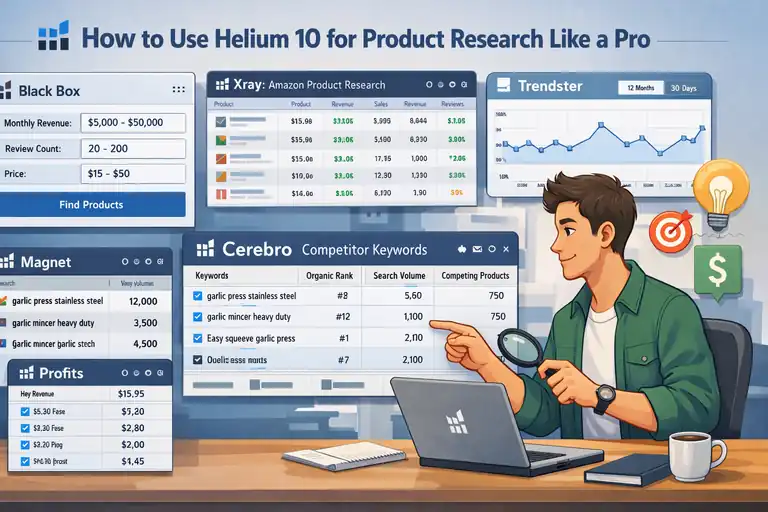 How to Use Helium 10 for Product Research Like a Pro
 Jungle Scout Review For Private Label Beginners: Real Profit Insights