
Table of Contents
Some links on The Justifiable are affiliate links, meaning we may earn a small commission at no extra cost to you. Read full disclaimer.
Web marketing solutions are what bridge the gap between getting clicks and making actual sales. But what truly makes some strategies convert while others just drain ad spend?
The difference lies in how each element—from data-driven targeting to seamless customer experiences—is designed to move people from curiosity to commitment.
In this guide, we’ll break down how modern web marketing solutions turn traffic into tangible conversions and what you can apply right now to do the same.
Understanding How Web Marketing Solutions Drive Conversions
Web marketing solutions work best when every campaign, page, and ad is built around one goal: turning attention into action.
That means not just driving clicks—but understanding what motivates someone to click and what makes them decide to buy.
The Role of Targeted Marketing in Conversion Success
Targeted marketing is about reaching the right audience, not just a big one. I’ve seen too many campaigns fail because they try to speak to everyone—and end up connecting with no one.
By using tools like Google Ads audience segments or Meta Ads Manager’s lookalike audiences, you can narrow down to people who’ve already shown interest in similar offers.
For example, if you run a fitness brand, targeting users who’ve engaged with “home workout” or “nutrition plans” content will outperform a broad “health & wellness” audience. The message feels personal, the relevance is higher, and the click-through rate (CTR) often doubles.
Pro tip: Layer behavioral targeting (like time spent on a landing page) with demographic data. When these overlap, conversions typically jump because users feel the ad “gets them.”
Why Data-Driven Campaigns Outperform Generic Strategies
Data is the compass of modern marketing. Instead of guessing what will work, analytics tools like Google Analytics 4 or HubSpot help you see exactly which messages, designs, or offers move people forward.
For instance, analyzing user behavior flow in GA4 reveals drop-off points—if 60% of users exit on the pricing page, you don’t need a new ad; you need to fix pricing clarity or page design.
Here’s what I recommend tracking consistently:
- Click-to-conversion rate: Measures campaign efficiency.
- Average session duration: Indicates content relevance.
- Funnel progression rate: Shows where leads lose interest.
When marketers let data guide creative choices, performance stops being a gamble and becomes a system.
Connecting Audience Insights to Buyer Intent
Audience insights are only valuable when tied to intent. If you know what problem your audience is trying to solve, you can tailor both message and offer precisely.
A practical example: an ecommerce store selling eco-friendly bottles might create separate landing pages—one focused on “sustainability” (for awareness stage) and another on “health safety” (for buyers closer to conversion).
Each message speaks directly to a different intent level, increasing conversions.
I suggest using tools like Google Search Console or Semrush to identify search queries signaling high intent—keywords like “buy,” “best,” or “discount” reveal ready-to-act users.
Align your copy and offer to these signals, and you’ll see both CTR and ROI rise.
Crafting Conversion-Focused Website Experiences
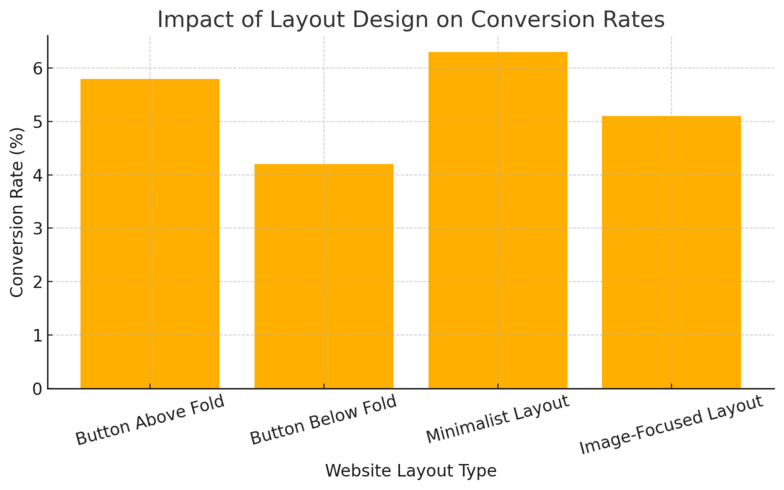
A website is your most powerful salesperson—and unlike ads, it never sleeps. A conversion-focused design builds trust, guides attention, and reduces hesitation before purchase.
How Website Design Shapes User Trust and Engagement
The human brain judges credibility in milliseconds. A study by Stanford University found that 75% of users admit to judging a company’s trustworthiness based on its website design. That’s a huge number.
To build instant trust:
- Consistency matters: Use uniform colors, fonts, and layouts.
- Visual hierarchy: Place key elements (like CTA buttons) where eyes naturally travel—usually top-right or just below the fold.
- Transparency: Add reviews, testimonials, and visible return policies.
I advise keeping product or service pages visually clean. White space isn’t “empty”—it’s breathing room that helps users focus on what matters: your offer.
The Psychology Behind Click Behavior and Action Triggers
Click behavior is rooted in psychology. People act when three forces align: motivation, ability, and a clear trigger. This is the essence of BJ Fogg’s Behavior Model.
You can influence all three:
- Motivation: Highlight emotional rewards (saving time, feeling confident, gaining status).
- Ability: Simplify steps. Don’t make users jump through hoops to buy.
- Trigger: Use persuasive CTAs like “Start My Free Trial” instead of “Submit.”
In my experience, swapping passive CTAs for action-driven ones can boost conversions by 20–40%. The brain craves direction—give it one.
Simplifying Navigation to Remove Friction in the Funnel
Every extra click between landing and checkout is an invitation to abandon ship. Simplifying navigation keeps focus locked on conversion.
Here’s a practical approach:
- Reduce menu clutter: Limit top navigation to 3–5 key options.
- Add visual breadcrumbs: So users always know where they are.
- Optimize mobile flow: Use sticky CTAs and auto-fill checkout forms.
I once audited a client’s site where moving the “Buy Now” button above the fold increased mobile conversions by 28%. Sometimes, it’s not about adding features—it’s about removing barriers.
Using Content Marketing To Guide Buyers Toward Action
Content marketing isn’t just about storytelling—it’s about story-selling.
The right content walks visitors from curiosity to confidence, and finally, to conversion.
Building Content That Answers Pain Points and Objections
Content that converts doesn’t just inform—it resolves doubt. Start by identifying friction points. What keeps users from saying yes?
For example, if you’re selling a SaaS tool, common objections might be: “Will it integrate with my CRM?” or “Is support available?” Address these upfront with FAQs, demos, or short case studies.
I recommend creating solution-driven content such as:
- Comparison pages (you vs. competitors)
- Tutorial videos showing real use cases
- Customer testimonials with quantifiable outcomes
When users see their pain reflected—and solved—conversion becomes the logical next step.
Creating Calls-To-Action That Convert Readers Into Leads
A call-to-action (CTA) is the handshake between content and conversion. But not all handshakes are equal. A weak one feels forced; a confident one feels natural.
Here’s what makes a CTA perform:
- Specificity: “Download the 7-step SEO checklist” beats “Learn more.”
- Placement: Mid-article CTAs outperform footer ones by up to 35%.
- Design contrast: Buttons should visually stand out from surrounding elements.
I once tested a CTA button color change (from gray to orange) for a blog lead magnet—it increased sign-ups by 22%. Small design details can create measurable results.
How Storytelling Strengthens Emotional Connection and Trust
Storytelling works because emotion fuels decision-making more than logic. When readers see themselves in a story, they trust the source more—and trust drives conversions.
Tell stories that show transformation, not just success. For instance, instead of saying “Our client grew traffic by 200%,” share how they got there—the struggle, the tweak, the breakthrough.
A good structure is: Problem → Struggle → Solution → Outcome. This mirrors the buyer’s own mental journey. I often use customer case snippets or personal anecdotes because authenticity converts better than perfection.
Expert Tip: Combine storytelling with visuals—charts, screenshots, or testimonial videos. People remember visuals 65% better than text alone.
Leveraging SEO And SEM For Sustainable Conversions
SEO and SEM are the backbone of lasting digital growth. While SEO builds steady organic visibility, SEM (Search Engine Marketing) delivers fast, targeted results.
When both work together, they create a system that attracts, qualifies, and converts traffic efficiently.
How SEO Builds Long-Term Conversion Pathways
SEO isn’t just about ranking higher—it’s about creating trust before a sale ever happens.
When users find your brand organically through helpful content or well-optimized product pages, they perceive you as credible and reliable.
Why this matters:
- Organic visitors are 8x more likely to trust your brand than paid ad visitors.
- Evergreen content (like guides or tutorials) continues to generate traffic and conversions for years.
I recommend starting with search intent mapping—categorizing keywords by purpose: informational, navigational, and transactional.
For example, “what is CRM software” targets education, while “best CRM for small business” signals buying intent. Creating separate pages for each intent builds a clear conversion funnel through SEO.
Tools like Ahrefs, Semrush, and Google Search Console help identify keywords that bring in both traffic and sales.
Combine that with strong internal linking, schema markup, and persuasive meta descriptions, and SEO becomes a long-term conversion engine—not just a traffic source.
Why Paid Search Complements Organic Growth
Paid search fills the gaps SEO can’t immediately cover. SEO takes time; SEM delivers speed. When combined, they reinforce each other beautifully.
Let me share an example. I worked with a B2B SaaS client who used Google Ads to target “CRM for startups” while optimizing blog content for “how to choose CRM software.”
The ads captured quick leads, and the organic posts nurtured them over time. Together, this dual strategy cut the client’s cost per acquisition (CPA) by 27%.
Here’s how to balance them:
- Use Google Ads Keyword Planner to test new keyword performance before building SEO content.
- Track impression share overlap between paid and organic results to avoid cannibalization.
- Retarget ad visitors through blog articles to lower ad spend while maintaining engagement.
SEM gives you immediate visibility; SEO ensures your brand stays visible long after the campaign ends.
Aligning Keyword Strategy With Purchase Intent
Every keyword represents a stage in the buyer’s journey. Aligning your keyword strategy to those stages means meeting users with the right message at the right time.
Here’s a simple breakdown:
- Awareness: “What is web marketing?” → Educational content.
- Consideration: “Best web marketing tools” → Comparison content.
- Decision: “Buy web marketing software” → Conversion pages.
I suggest building separate content clusters around these keyword types. Use intent-based CTAs on each page—“Learn more” for awareness, “Compare plans” for consideration, and “Start free trial” for decision.
When search intent and CTA match perfectly, conversions naturally rise.
The Power Of Personalization In Web Marketing Solutions
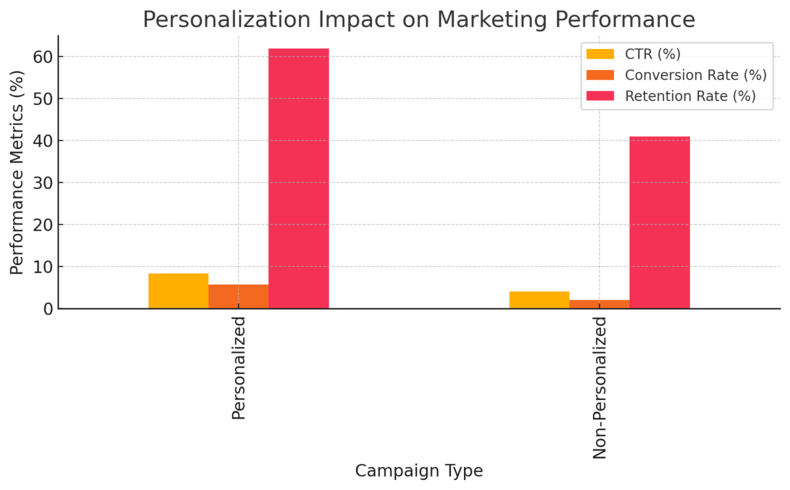
Personalization is no longer a luxury—it’s what makes users feel seen and understood.
Web marketing solutions use behavioral data and AI to shape each visitor’s experience in real time.
How Behavioral Data Enables Hyper-Targeted Messaging
Behavioral data is simply user activity captured across your site—pages viewed, buttons clicked, products added to cart, or time spent on specific sections. When analyzed properly, it tells you what each visitor truly wants.
For example, if someone browses your “enterprise pricing” page, it’s safe to infer they’re a high-value lead. Platforms like HubSpot, Segment, or ActiveCampaign can automatically tag and segment such visitors for personalized follow-ups.
Try this approach:
- Track user behavior through Google Analytics events or Meta Pixel.
- Segment audiences into categories like researchers, browsers, and buyers.
- Create messaging tailored to each—such as showing discounts only to cart abandoners.
This kind of targeting not only boosts conversions but also reduces wasted ad spend by focusing only on users most likely to act.
Dynamic Content Tools That Adapt To User Behavior
Dynamic content means your website changes based on who’s viewing it. Think of it like a salesperson who remembers your last visit and adapts their pitch accordingly.
Tools such as Optimizely, Dynamic Yield, and Unbounce Smart Traffic can alter headlines, CTAs, and product recommendations in real time.
Example scenario: A returning visitor who previously viewed “marketing automation software” might now see a homepage banner reading, “Still comparing automation tools? Try ours free for 14 days.” That single message shift can lift conversions by 15–25%.
Dynamic content shortens the decision cycle because it reduces mental friction. The user doesn’t need to start over—they feel recognized.
Real-Time Personalization That Boosts On-Site Conversions
Real-time personalization uses AI and machine learning to instantly tailor experiences based on user signals like location, device, or past interactions.
For instance, Adobe Target can deliver localized landing pages—showing U.S. visitors “Free 2-day shipping” while displaying “Next-day delivery” for UK users.
I’ve seen personalization lift conversion rates by up to 40% when combined with contextual triggers such as time of day or referral source.
Imagine a visitor arriving from a comparison blog post—they might instantly see a testimonial slider emphasizing “Why users switched to us.” That message feels timely and relevant.
The future of conversions isn’t generic—it’s personalized in milliseconds.
Converting With Email And Retargeting Campaigns
Email and retargeting remain the two most powerful ways to convert warm leads who already know your brand.
Together, they create a loop that keeps users engaged until they’re ready to buy.
How Automated Email Sequences Nurture Leads Into Sales
Automation allows you to deliver the right message at the right time without manual effort. I advise using tools like Klaviyo, Aweber, or Mailerlite to build behavioral email flows.
A simple 3-step sequence could look like this:
- Welcome Email: Introduce value (offer or free guide).
- Education Email: Solve a problem related to your product.
- Conversion Email: Offer a time-limited incentive or free demo.
For example, an ecommerce brand selling supplements might trigger an email 24 hours after a user abandons cart with the subject line: “Still thinking about your health goals?” followed by a discount. This subtle reminder converts better than generic promotions.
Automated flows reduce drop-offs, nurture trust, and drive up to 320% higher revenue per email compared to one-off blasts.
Retargeting Strategies That Re-Engage Lost Visitors
Retargeting is your second chance to convert visitors who didn’t buy the first time. Platforms like Meta Ads, Google Ads, and LinkedIn Ads make it easy to serve personalized messages to past site visitors.
Here’s what I suggest:
- Segment audiences by funnel stage (product viewers, cart abandoners, blog readers).
- Customize creative—show testimonials to skeptics, discounts to near-buyers.
- Control frequency so users see your ad 3–5 times, not 15.
A case study from WordStream found that retargeting ads can increase conversion rates by 150%. They work because they reconnect with people who already showed intent—meaning the trust gap is smaller.
Crafting Compelling Copy That Inspires A Return Click
Ad or email copy should speak directly to emotion, not logic. Instead of saying “Get 10% off,” frame it as “You left something behind—come back and make it yours.” It humanizes the brand.
When writing copy, I follow a simple structure:
- Hook: Grab attention with curiosity (“We saved your spot…”).
- Value: Offer a clear benefit (“Claim your 10% off before midnight.”).
- CTA: Drive urgency (“Complete checkout now.”).
Small tweaks like using “your” instead of “the” make messages feel personal. Combine that with urgency or exclusivity, and click-through rates often double.
Expert Tip: Integrate your email platform with retargeting ads. For instance, sync Klaviyo audiences with Facebook Ads Manager to target users who opened but didn’t click your email. That way, your message follows them seamlessly across channels—without feeling repetitive.
Measuring Success With Analytics And Conversion Tracking
If you can’t measure it, you can’t improve it. Analytics turn web marketing solutions from guesswork into a precise system for growth.
By tracking the right metrics, you can see which channels, campaigns, and messages actually drive conversions—not just clicks.
Setting Up Accurate Tracking For Every Conversion Event
Before you scale any campaign, your tracking foundation must be solid. That means defining what a “conversion” actually means for your business—whether it’s a purchase, form submission, demo request, or newsletter signup.
Here’s a simple way to get started:
- Use Google Tag Manager (GTM): It lets you track actions like button clicks or form completions without editing code.
- Integrate with Google Analytics 4 (GA4): Set up custom “Events” for conversions. Example: generate_lead, add_to_cart, or purchase_completed.
- Link with ad platforms: Sync GA4 conversions with Google Ads or Meta Ads Manager to measure campaign ROI.
I suggest running a quick audit after setup—click through your site yourself to ensure events fire correctly. Even a small misfire (like a missing thank-you page tag) can distort all downstream data.
Think of tracking setup like plumbing—if one pipe leaks, the whole system suffers.
Interpreting Data To Optimize Campaign Performance
Data only matters when it leads to decisions. The key is knowing what story the numbers are telling you.
For example, if your click-through rate (CTR) is high but conversion rate (CVR) is low, that means your ad message works—but your landing page doesn’t follow through.
Conversely, a low CTR but high CVR means your page converts well, but you’re not reaching the right people.
What I recommend focusing on:
- Source-to-sale tracking: Use UTM parameters (like ?utm_source=google&utm_campaign=springpromo) to trace every sale back to its origin.
- Funnel visualization: In GA4, the Path Exploration feature shows where users drop off—like abandoning checkout or skipping a signup form.
- Behavioral analysis: Heatmaps in Hotjar or Microsoft Clarity show what users actually do on-page, revealing scroll depth and rage clicks.
Once you interpret patterns rather than just numbers, optimization becomes proactive, not reactive.
Key Metrics That Reveal True ROI Of Web Marketing Solutions
Vanity metrics (like impressions or likes) feel nice, but they don’t pay the bills. True ROI comes from metrics that connect effort to revenue.
The key metrics to monitor are:
- Conversion Rate (CVR): The percentage of visitors completing the desired action.
- Cost Per Acquisition (CPA): Total ad spend divided by conversions.
- Customer Lifetime Value (CLV): Average revenue per user over time.
- Return on Ad Spend (ROAS): Revenue generated per dollar spent on ads.
I advise comparing CLV and CPA side by side. If CLV is lower than CPA, you’re scaling losses, not profits.
Most successful brands I’ve worked with aim for a CLV-to-CPA ratio of at least 3:1—it’s a healthy balance of growth and sustainability.
Integrating AI And Automation For Smarter Conversions
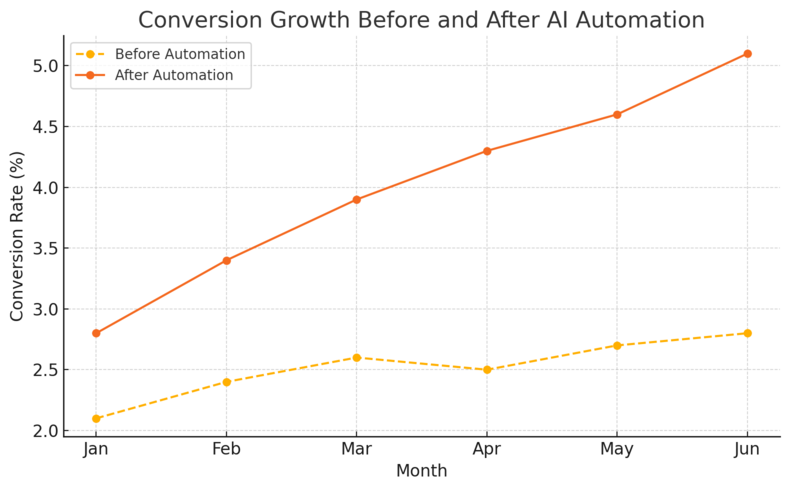
AI and automation aren’t just buzzwords—they’re the tools that make web marketing solutions scalable and adaptive.
They take repetitive work off your plate while improving precision across targeting, personalization, and prediction.
How AI Enhances Customer Journey Mapping
AI tools like HubSpot AI, Segment, and Google Analytics Insights analyze behavior patterns across platforms—web, email, and ads—to build a complete customer journey.
Instead of guessing which touchpoints matter most, AI models identify the exact moments that lead to a sale.
For example, it might reveal that users who read two blog posts and visit your pricing page are 4x more likely to convert.
Here’s what I suggest using AI for:
- Automating journey mapping across devices.
- Predicting drop-off points before they happen.
- Recommending content or offers that match each journey stage.
When AI shows you how people buy—not just that they buy—you can design experiences that guide them naturally to conversion.
Using Automation To Scale Personalized Experiences
Automation gives you personalization at scale. You can deliver one-to-one messages to thousands without lifting a finger.
Let’s say you use ActiveCampaign or Klaviyo. These tools allow you to set automated workflows triggered by behavior—like sending a follow-up email when someone downloads an ebook or offering a coupon when they abandon a cart.
Practical automation ideas:
- Send product recommendations based on browsing history.
- Trigger retargeting ads for visitors who spend 2+ minutes on a pricing page.
- Use automated lead scoring to prioritize high-intent contacts for your sales team.
I’ve seen automation double conversion rates simply because it keeps the brand relevant at every stage without being pushy.
Predictive Analytics For Anticipating Buyer Behavior
Predictive analytics is where AI becomes truly powerful—it forecasts what users are likely to do next.
Tools like Google Cloud AI, Adobe Sensei, or Pecan AI use past data to predict future actions such as purchase likelihood or churn risk. Imagine knowing which 20% of leads are 80% likely to buy—you’d focus your marketing spend far more effectively.
A practical use case: An ecommerce brand can identify customers who frequently buy every 45 days and send replenishment reminders at day 42. That simple timing tweak can boost repeat sales by up to 30%.
Predictive analytics doesn’t replace intuition—it enhances it with precision.
Overcoming Common Conversion Barriers In Web Marketing
Every marketing funnel leaks somewhere. Knowing where and why people drop off is how you plug those leaks and recover lost revenue.
Identifying Technical And UX Issues That Block Sales
Sometimes, it’s not your marketing—it’s your website. Slow pages, broken links, or confusing navigation kill conversions faster than a bad headline.
Start with a simple UX audit:
- Use Google PageSpeed Insights to check load times (aim for under 3 seconds).
- Test your site on mobile—buttons too small or CTAs below the fold are major friction points.
- Run session recordings in Hotjar to watch where users hesitate or abandon.
I once helped an ecommerce brand that had a 70% cart abandonment rate. Turns out, their checkout form required users to create an account.
Removing that one step increased conversions by 38%. Often, small fixes create the biggest wins.
Fixing Mismatched Messaging Across Campaigns
If your ad says one thing and your landing page says another, users lose trust immediately. Message consistency builds confidence that your brand delivers on promises.
A good fix is to maintain ad-to-page alignment:
- Match headlines and value propositions word-for-word.
- Use the same visuals and tone across ads and landing pages.
- Keep your CTA identical to avoid cognitive dissonance.
For example, if your ad promotes “Free Demo,” the landing page shouldn’t say “Book a Consultation.” Consistency breeds clarity, and clarity drives action.
How A/B Testing Helps Identify What Really Works
A/B testing removes opinion from the equation. Instead of guessing which headline or design performs best, you test them against real users.
Tools like VWO, and Optimizely make testing simple.
You can test:
- Headlines (emotional vs. logical phrasing).
- CTA colors and placement.
- Page layouts or offer types.
I suggest testing one variable at a time to isolate the cause of improvement. Over time, these small iterative tests can lead to 50–100% conversion lifts without increasing traffic.
Building A Continuous Optimization Strategy
Optimization is not a one-time project—it’s a cycle.
Web marketing solutions work best when you treat improvement as an ongoing process guided by data, feedback, and experimentation.
The Importance Of Iteration In Conversion Growth
Conversion success rarely happens overnight. It’s built on continuous iteration—small, data-backed improvements made over time.
Think of it like tuning a race car. Each adjustment—faster load speed, clearer headline, better CTA—shaves seconds off your lap until you’re running at peak performance.
I recommend setting monthly review cycles where you:
- Analyze top-performing pages and campaigns.
- Identify low-performing areas.
- Set 1–2 experiments for improvement.
Those small but steady tweaks compound faster than big, occasional overhauls.
How Feedback Loops Strengthen Future Campaigns
A feedback loop ensures you’re learning from every campaign—what worked, what didn’t, and why.
You can build this loop by:
- Collecting user feedback through post-purchase surveys or exit-intent popups.
- Using CRM notes or support tickets to spot recurring objections.
- Reviewing analytics and heatmaps after each major campaign.
Once you identify patterns, feed those insights directly back into your ad copy, offers, and targeting. That’s how campaigns evolve intelligently instead of repeating old mistakes.
Turning Conversion Data Into Long-Term Marketing Insights
The best marketers don’t just collect data—they extract meaning from it. Conversion data tells you what resonates with your audience and where to scale next.
For instance, if you find 70% of conversions come from mobile devices, prioritize mobile-first experiences and ad formats. If one type of content generates unusually high assisted conversions, double down on that format.
Over time, these insights shape your strategy into a conversion ecosystem—self-improving, data-informed, and audience-driven.
Pro Tip: Treat analytics and optimization as part of your brand’s culture, not a side project. When your entire team—from marketing to design—thinks in terms of testing, data, and user empathy, conversion growth becomes not just achievable but inevitable.

I’m Juxhin, the voice behind The Justifiable.
I’ve spent 6+ years building blogs, managing affiliate campaigns, and testing the messy world of online business. Here, I cut the fluff and share the strategies that actually move the needle — so you can build income that’s sustainable, not speculative.
Related posts:
 Performance Based Marketing: Transform Your Advertising Strategy
 5 Must-Have Email Signup Forms to Grow Your List Effortlessly
 Take the Leap With Next Step Marketing Solutions That Convert
 7 Integrated Marketing Solutions That Unify Your Strategy
 Advanced Marketing Solutions That Give You a Competitive Edge
 Adsterra Advertising: Boost Your Online Business with High-Quality Traffic