Table of Contents
Some links on The Justifiable are affiliate links, meaning we may earn a small commission at no extra cost to you. Read full disclaimer.
If you’ve ever searched for a website like Fiverr, you’ve probably realized there’s a whole universe of freelance marketplaces out there—but which one truly stands out?
Whether you’re a freelancer looking for better pay or a business owner tired of sifting through low-quality gigs, finding the right alternative can feel like a quest for buried treasure.
So, what’s the best website like Fiverr that actually delivers quality work, fair prices, and a smooth experience? Let’s dive into the best platforms worth your attention today.
1. Upwork: The Most Established Website Like Fiverr
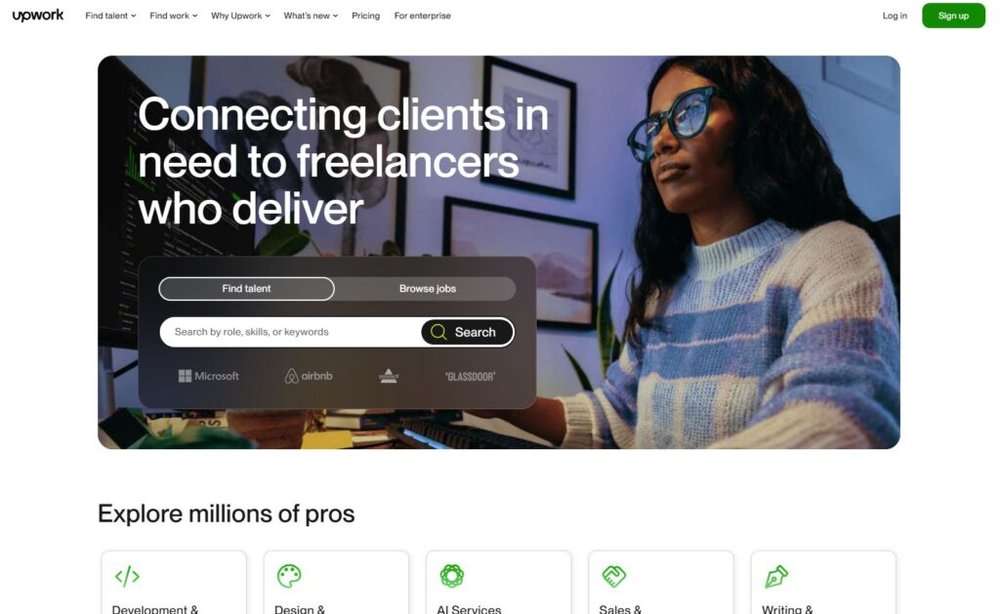
If you’ve been exploring options for a website like Fiverr but want something more structured, Upwork is where you’ll likely land.
It’s a massive global platform connecting millions of freelancers with businesses—yet it operates quite differently from Fiverr’s quick gig model.
How Upwork Connects You With Skilled Professionals
Upwork’s strength lies in its talent-matching system, which goes beyond simple gig listings. Instead of scrolling endlessly through categories, you post a detailed job description, and qualified freelancers submit proposals tailored to your needs.
I find this approach much more collaborative. You’re not just buying a pre-packaged gig—you’re reviewing portfolios, ratings, and personalized cover letters before hiring.
For example, if you’re hiring a content writer, you can:
- Post a project describing your tone, word count, and deadline.
- Receive bids within minutes from writers who meet your criteria.
- View their previous Upwork projects, client feedback, and hourly rates.
This process saves hours compared to Fiverr’s “gig shopping” model and gives you better control over who joins your project.
Quick tip: Always use Upwork’s “Project Catalog” if you still prefer a Fiverr-style experience—it lets you buy fixed-price packages while keeping Upwork’s security features.
Why Businesses Prefer Upwork for Long-Term Projects
Unlike Fiverr, which is built around one-off tasks, Upwork excels in helping businesses build ongoing relationships with freelancers.
I’ve seen companies use Upwork not just for one design job, but for building entire remote teams—writers, developers, virtual assistants—all under one platform.
The system supports milestone-based payments, making it perfect for projects that evolve over time.
Here’s what makes it ideal for long-term use:
- Work Diaries: You can monitor hourly work with automatic screenshots and activity levels.
- Contract Management: Everything from proposals to payment is handled in one place.
- Performance Tracking: You can keep favorite freelancers on your “Talent Cloud” for future work.
From my experience, Upwork’s ecosystem helps reduce hiring friction, ensuring quality and accountability—something Fiverr sometimes struggles with when it comes to scaling projects.
How Upwork’s Bidding System Differs From Fiverr’s
Here’s where Upwork really sets itself apart. Fiverr relies on gig listings—you browse and buy directly. Upwork flips that around with a bidding system where freelancers apply to your posted jobs.
Each freelancer uses Connects (Upwork’s in-platform currency) to submit a proposal. You’ll receive:
- A short cover letter
- A rate quote (hourly or fixed)
- Samples or a portfolio link
This setup rewards skill and communication rather than search algorithms. In Fiverr, visibility often depends on how well a gig is optimized. In Upwork, what matters is relevance, pitch quality, and proven results.
That’s why I often recommend Upwork for complex or ongoing projects—it encourages conversation and collaboration rather than impulse hiring.
Tips for Standing Out as a Freelancer on Upwork
If you’re a freelancer hoping to thrive on Upwork, think of your profile as your storefront. You’re not competing with gimmicks; you’re competing with professionals.
Here’s how to rise above the noise:
- Specialize: Instead of listing everything you can do, focus on one niche (e.g., “B2B SaaS copywriting”).
- Write Personal Proposals: Always reference the client’s brief directly—show you read it.
- Use Case Studies: Even short examples of past work boost trust instantly.
- Stay Responsive: Clients often hire the first professional who communicates clearly.
Want to connect with top freelancers fast? Post your project on Upwork and start hiring within minutes.
In my experience, freelancers who treat Upwork like LinkedIn rather than Fiverr—prioritizing professionalism and personal connection—build better, longer-lasting client relationships.
2. Toptal: The Premium Website Like Fiverr for Experts
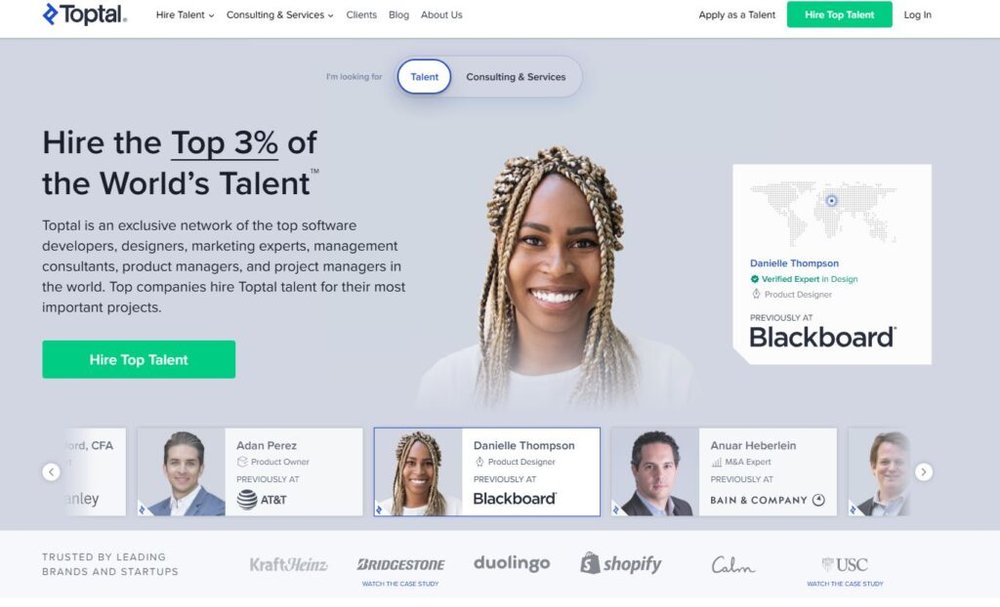
If Upwork is the world’s largest freelance marketplace, Toptal is the elite club. It positions itself as a curated network of the top 3% of freelancers—meaning it’s designed for clients seeking verified experts, not entry-level talent.
Toptal isn’t the best choice if you’re looking for quick, inexpensive gigs. But if you want guaranteed quality or highly specialized expertise (like AI developers or fintech designers), it’s one of the strongest Fiverr alternatives out there.
How Toptal Selects Only the Top 3% of Talent
Toptal’s biggest differentiator is its vetting process. Every freelancer must pass through multiple stages:
- Language and Communication Test – Ensures fluency in English and professionalism.
- Technical Screening – Practical coding or design challenges to prove expertise.
- Live Project Evaluation – A real-world test judged by senior experts.
This process weeds out around 97% of applicants, leaving only those who demonstrate consistent quality and reliability.
When I first explored Toptal, I was impressed by how streamlined its onboarding felt. Unlike Fiverr, where anyone can sign up, Toptal behaves more like a talent agency with digital infrastructure—it actively matches freelancers to clients based on skill and project fit.
Why Toptal Is Ideal for High-Budget, Specialized Projects
Let’s be real: Toptal is expensive. But that’s intentional. Clients pay for confidence and minimal risk.
A software startup might spend $10,000+ hiring a senior developer through Toptal, but they’ll get someone who has already shipped enterprise-grade products.
Similarly, a company needing a financial consultant can find a vetted professional who’s worked at Deloitte or McKinsey.
You’re not browsing through dozens of options—you’re connected to pre-screened candidates within 48 hours. This level of speed and assurance is rare in freelancing.
I believe Toptal’s model suits organizations that value time and precision over cost savings. It’s not for everyone—but when you truly need “best in class,” it pays for itself.
Comparing Toptal’s Vetting Process to Fiverr’s Open Model
Fiverr’s open model is inclusive—anyone can join and offer services instantly. That’s both a blessing and a curse. You’ll find diamonds, but you’ll also sift through plenty of rough stones.
Toptal, on the other hand, operates more like a curated marketplace. Every freelancer is pre-approved and actively monitored for quality. This means no guessing games, no “is this person real?” moments.
To illustrate:
- Fiverr = Marketplace where anyone can open a shop.
- Toptal = Private members’ club where every vendor is vetted.
From my view, it all comes down to your priorities. Fiverr gives you access to everyone. Toptal gives you access to the best.
When to Choose Toptal Over Fiverr for Your Next Project
Here’s when Toptal is worth every penny:
- You’re managing a critical project that demands zero errors.
- You want to scale quickly with vetted experts rather than gamble on untested freelancers.
- You’re seeking specialized skills (blockchain, AI, enterprise software, financial modeling).
- You prefer a hands-off hiring process, letting Toptal’s team find matches for you.
Ready to skip the guesswork and work with elite talent? Get matched with top experts on Toptal today.
If you’re a startup CTO or an agency owner tired of inconsistent results from Fiverr gigs, Toptal can feel like a breath of fresh air. I often describe it as Fiverr’s luxury sibling—less variety, higher quality, and far greater peace of mind.
3. Freelancer.com: A Flexible Alternative to Fiverr
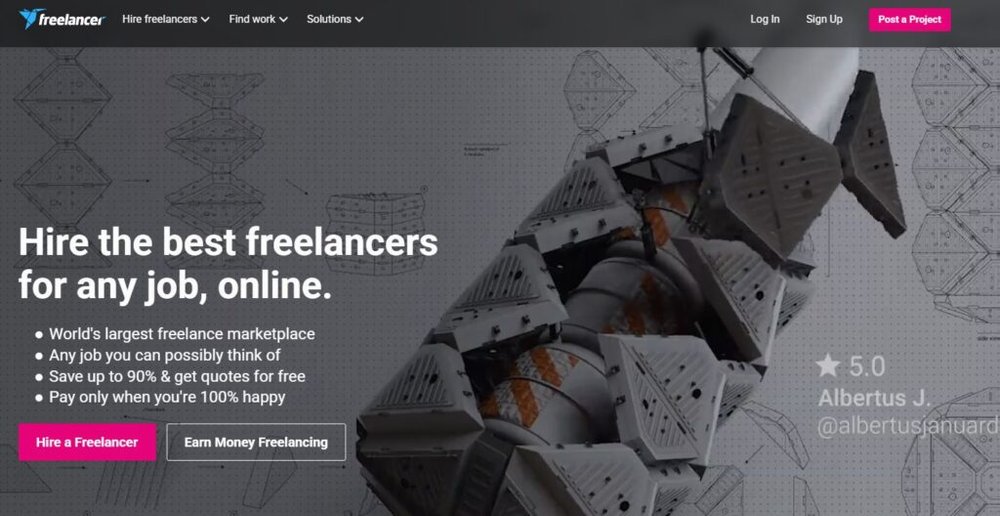
If you’re looking for a website like Fiverr that gives you a bit more flexibility in how you hire or work, Freelancer.com might surprise you. It’s one of the oldest freelancing platforms around, connecting over 60 million users worldwide.
What sets it apart is how it blends project-based hiring with open competition through contests—a unique feature that gives clients more creative options.
How Freelancer.com Balances Price and Quality
Freelancer.com works as a middle ground between Fiverr’s simplicity and Upwork’s structure. You can either post a project and let freelancers bid on it, or browse freelancer profiles and invite specific people to apply.
I find that this model gives both sides—client and freelancer—a healthy balance of control and competition. Prices are often lower than on Upwork, but because of the bidding system, you can still find top talent willing to compete for your project.
For example, if you post a logo design project with a $200 budget, you might get:
- 30 proposals ranging from $100 to $300
- Designers sharing samples and turnaround times
- A clear breakdown of deliverables before you award the job
To ensure quality, I recommend filtering freelancers by “Verified by Freelancer” and “Preferred Freelancer” badges. These indicate top performers with strong reviews and verified identities.
Understanding Freelancer.com’s Contest Feature
This is where Freelancer.com really shines. Their contest feature lets you crowdsource creative ideas before paying anyone.
Here’s how it works in practice:
- You create a contest (for example, “Design a New App Icon”).
- Set a prize—say, $150.
- Designers from around the world submit their entries.
- You pick your favorite and award the prize.
I’ve seen companies use this for logo designs, name ideas, even landing page mockups. It’s an affordable way to test creativity from hundreds of people without committing to one freelancer upfront.
I’d suggest writing a detailed brief—include colors, examples, and inspiration. The clearer you are, the better your submissions will be.
How to Navigate the Platform’s Fee and Payment Structure
Freelancer.com uses a sliding commission fee, typically between 10–20% depending on the project type. Clients can pay either by milestone or in full once the job is done.
Here’s a quick breakdown:
- For hourly projects: You pay as work is logged through Freelancer’s time tracker.
- For fixed projects: You set milestones (like “Homepage Design” or “Copywriting Draft”) and release funds once each part is complete.
- For contests: You pay upfront for the prize, but the money stays in escrow until you select a winner.
The escrow system ensures safety for both sides—I recommend always using it rather than paying outside the platform.
One practical tip: Withdraw funds using Payoneer or Direct Bank Transfer to reduce fees, since PayPal tends to charge extra conversion costs.
When Freelancer.com Outperforms Fiverr for Specific Tasks
Freelancer.com outshines Fiverr when you need custom, collaborative work rather than predefined gigs. Fiverr is great for ready-to-go services, but Freelancer.com’s proposal system works better when your project requires back-and-forth communication.
It’s particularly strong for:
- App development (complex, milestone-based work)
- UI/UX design contests (crowdsourced creativity)
- Large-scale writing projects (where consistent tone matters)
In short, when you want creativity, flexibility, and the ability to test ideas before you pay—Freelancer.com has the edge.
Looking for flexible pricing and fast bids? Start your first project on Freelancer.com and receive proposals in minutes.
4. PeoplePerHour: A UK-Based Website Like Fiverr
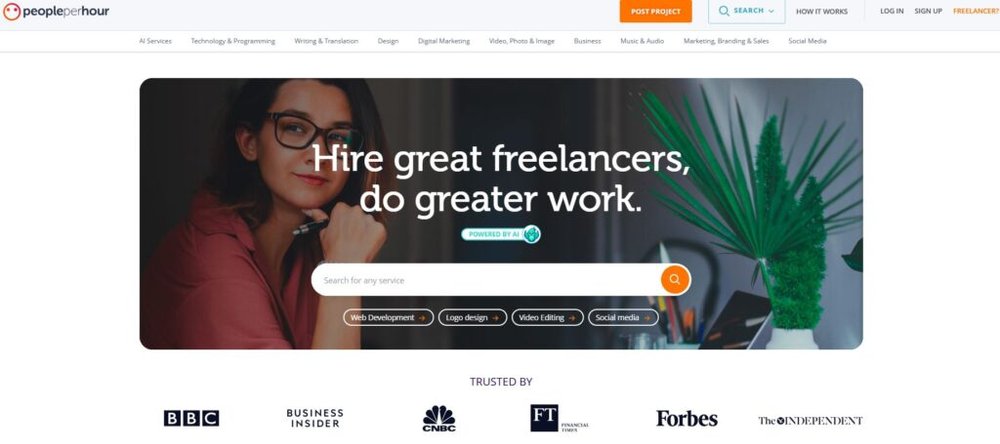
If Fiverr and Upwork had a British cousin, it would be PeoplePerHour. Founded in London, this platform bridges the gap between traditional freelancing and gig-based work, with a strong European presence.
It’s especially handy for clients who prefer local talent or want to collaborate in similar time zones.
Why PeoplePerHour Appeals to European Clients and Freelancers
PeoplePerHour caters particularly well to UK and EU businesses looking to hire nearby professionals. Payments are in GBP, EUR, or USD, which makes transactions smoother and cheaper for European users compared to Fiverr’s USD-only model.
As someone who’s hired through PeoplePerHour, I’ve noticed the platform’s geo-matching feature really helps—it suggests freelancers based on region and language. This makes it easier to find someone who understands your market context, tone, and audience.
It’s also GDPR-compliant (important for European clients) and integrates seamlessly with Stripe for secure payments.
How Hourlies Work Differently From Fiverr’s Gig Listings
PeoplePerHour’s equivalent to Fiverr’s “gigs” is something called Hourlies—predefined service packages that freelancers can sell at a fixed rate.
Here’s how they differ:
- Hourlies are usually time-based (e.g., “I’ll write a 1,000-word article in 2 hours for £80”).
- Fiverr gigs are deliverable-based (e.g., “I’ll write a blog post for $80”).
That small distinction adds flexibility. Freelancers can charge for both their time and expertise, while clients can negotiate adjustments easily.
I recommend starting with an Hourly if you’re new to the platform—it’s the fastest way to test quality without committing to a large project.
Tips for Building Credibility and Ranking Higher on PeoplePerHour
Your success on PeoplePerHour depends heavily on your profile score and client satisfaction rate.
Here’s what I suggest to boost visibility:
- Complete your profile 100%. Include certifications, portfolio links, and a professional photo.
- Deliver early. Timeliness directly affects your ranking.
- Request feedback. Positive reviews matter more here than on Fiverr’s algorithm.
- Use the “Availability” feature. Let clients know when you’re free—PeoplePerHour promotes active freelancers more often.
One of my clients told me they hired someone solely because the freelancer’s availability was clearly listed—so yes, small things like that matter here.
The Platform’s Unique Payment Protection System
PeoplePerHour uses a SafePay escrow system. When you start a project, the client deposits funds into escrow, which are only released once the job is approved.
This prevents common freelancing issues like non-payment or incomplete work.
Clients can also split payments into milestones, and freelancers can raise dispute tickets if anything goes wrong. It’s a nice balance between Fiverr’s instant payments and Upwork’s rigid structure.
Need local freelancers you can trust? Discover PeoplePerHour and hire within your region.
I believe this makes PeoplePerHour especially appealing for those who value accountability but don’t want too much red tape.
5. Guru: A Reliable Platform for Professional Freelancers
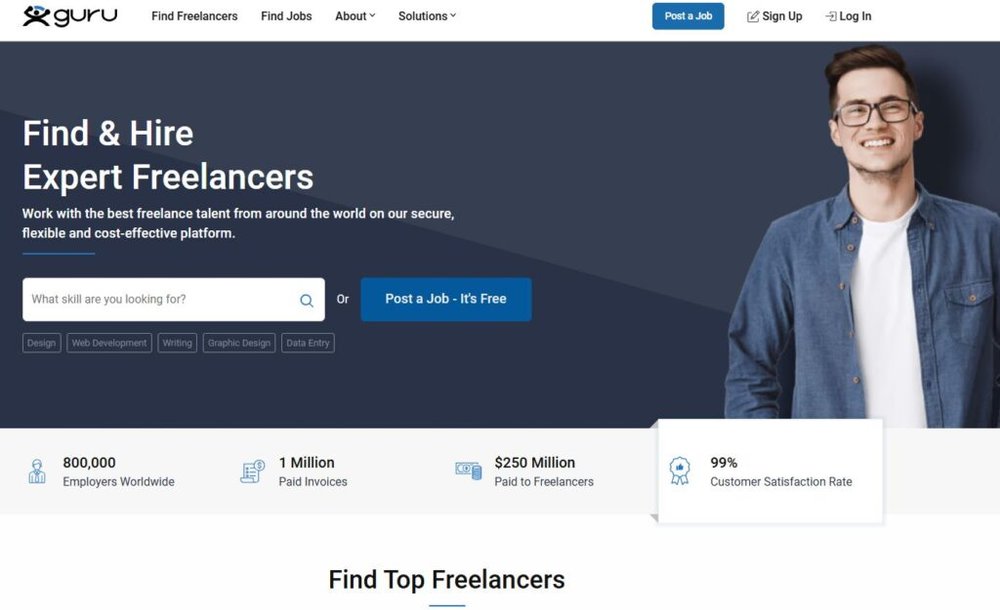
Guru is another underrated website like Fiverr—but one that’s tailored to seasoned professionals.
It’s a quiet workhorse in the freelance world, offering a more business-oriented experience with a heavy focus on collaboration and trust.
How Guru’s WorkRoom Enhances Collaboration and Workflow
Guru’s WorkRoom feature is what really stands out. It’s a project management space where you can chat, share files, set milestones, and track progress—all inside the platform.
For instance, if you’re managing a content marketing project, you can:
- Create milestones (research, draft, final edit)
- Upload files directly in the WorkRoom
- Leave feedback on specific deliverables
It’s a smoother setup compared to Fiverr’s limited messaging system. I suggest using the WorkRoom for everything—it creates a transparent record of every step, which helps resolve disputes and builds trust.
Comparing Fiverr’s Gig Model With Guru’s Task-Based System
Fiverr’s model focuses on one-off gigs, while Guru emphasizes ongoing relationships through task-based collaboration.
On Guru, freelancers can create agreements—structured contracts outlining the scope, deadlines, and payments. Clients can then fund these tasks using SafePay, Guru’s version of escrow.
This structure is ideal for businesses that want to hire freelancers regularly without constantly renegotiating terms. I’d say it feels more like working with a consultant than buying a gig.
When Guru Offers Better Value for Experienced Freelancers
Guru tends to attract mid- to senior-level freelancers, especially in tech, engineering, and professional writing. Because of that, rates are generally higher—but so is reliability.
If you’re an experienced freelancer tired of Fiverr’s race-to-the-bottom pricing, Guru can be a refreshing change. The low commission rate (as little as 5%) also means you keep more of your earnings.
I know freelancers who moved from Fiverr to Guru and now handle fewer clients but make more income overall. It’s a smart move if you’re aiming for quality over volume.
Want to build a trusted team of freelancers? Explore Guru and collaborate with experienced pros.
How to Build Long-Term Client Relationships on Guru
Guru’s interface encourages long-term collaboration rather than one-off gigs. Here’s how to make the most of that:
- Create clear agreements. Define deliverables, pricing, and timelines before starting.
- Use the WorkRoom for all communication. It keeps everything documented.
- Request recurring contracts. Once you’ve built trust, clients can set up automatic weekly or monthly projects.
The longer you work with a client on Guru, the more likely they’ll become a repeat customer—and Guru rewards that loyalty by lowering your platform fees the more you earn together.
6. Truelancer: The Budget-Friendly Website Like Fiverr

If you’re searching for a website like Fiverr but want something that’s more affordable and locally focused, Truelancer is an underrated gem.
It’s particularly popular among startups, small businesses, and solo entrepreneurs looking for reliable talent at lower costs without compromising too much on quality.
How Truelancer Attracts Startups and Small Businesses
Truelancer’s biggest appeal is affordability. Most freelancers on the platform are from emerging markets like India, Bangladesh, and the Philippines, which naturally brings down project costs.
For example, a logo design that might cost $75 on Fiverr could be completed on Truelancer for around $30–$40—with comparable quality. That pricing flexibility is a big deal for startups trying to stretch limited budgets.
I believe the platform’s “Post Project” feature is particularly handy. You describe your task, budget, and deadline, and within minutes, freelancers start bidding.
You can then compare portfolios, ratings, and response times—all without needing to sift through hundreds of pre-made gigs as on Fiverr.
It’s fast, simple, and cost-effective, especially if you’re hiring for recurring work like blog writing, app testing, or social media management.
Key Features That Differentiate Truelancer From Fiverr
While both platforms connect freelancers with clients, Truelancer operates with a bid-based system, more like Upwork. This allows greater flexibility in pricing and scope, which is perfect for small projects that evolve over time.
Some standout features include:
- WorkStream Chat: A built-in project messaging tool that keeps communication and files organized.
- Skill Tests: Truelancer verifies freelancers’ skills through short assessments—useful when filtering candidates.
- Milestone Payments: Funds are held in escrow and released once you approve the work.
Fiverr’s structure is great for quick gigs, but Truelancer feels more adaptable for clients who need negotiation, customization, or phased delivery.
Tips for Finding Hidden Talent on Truelancer
One of the smartest ways to use Truelancer is to look beyond the top-rated freelancers. The platform is smaller, which means there are hidden gems—skilled professionals who haven’t yet built hundreds of reviews.
Here’s how I recommend finding them:
- Filter by Country: You’ll often find excellent talent in smaller regions with lower competition.
- Review Recent Projects: Look at completed work samples rather than just star ratings.
- Test Small Tasks First: Offer a mini-project ($20–$30) before committing to a full one.
You’d be surprised how often these smaller freelancers outperform big Fiverr sellers because they’re hungry to build a track record.
Need quality work without draining your budget? Find affordable talent on Truelancer today.
How Freelancers Can Grow a Steady Client Base Here
If you’re a freelancer using Truelancer, consistency is everything. The platform rewards active users with higher visibility and better ranking in client searches.
To grow faster, I’d suggest:
- Respond quickly to job posts—early bidders often get noticed first.
- Offer custom proposals that directly address the client’s needs.
- Keep rates competitive but gradually increase them after successful projects.
- Request client feedback after each delivery—reviews are gold here.
Over time, these steps build trust and attract repeat business. Many freelancers I know treat Truelancer as a stepping stone before scaling to bigger sites like Upwork or Fiverr Pro.
7. 99designs: The Best Website Like Fiverr for Designers

If your work revolves around visuals, branding, or creative design, 99designs is arguably the best website like Fiverr for design-specific projects.
It’s not a general freelance platform—it’s laser-focused on graphic design, making it a favorite among businesses looking for professional creative output.
How 99designs Specializes in Creative and Branding Work
Unlike Fiverr’s generalist approach, 99designs only deals in creative services like:
- Logo and brand design
- Website and app design
- Packaging, book covers, and marketing materials
The experience feels more curated. Instead of browsing random portfolios, you either launch a contest or work directly with a designer.
I’ve seen many startups use it to establish a complete brand identity—logo, color palette, typography, all from one platform. 99designs also assigns project managers for premium clients, ensuring smooth creative collaboration.
Understanding the Design Contest Model
The contest system is 99designs’ signature feature—and it’s both exciting and practical.
Here’s how it works:
- You post a creative brief (e.g., “I need a modern, minimalist logo for a vegan skincare brand”).
- You set a budget (usually $299–$1,299 depending on complexity).
- Dozens of designers submit their work.
- You give feedback and eventually pick a winner.
This model lets you see multiple creative directions before spending a dime. I recommend being very specific in your brief—share visual inspirations or brand examples—to get better design submissions.
Why 99designs Offers Better Creative Quality Control Than Fiverr
Fiverr has brilliant designers, but quality can be hit-or-miss because anyone can sell gigs there. 99designs, however, uses a tiered designer system (Entry, Mid-Level, Top-Level) to maintain standards.
Each level is reviewed by a team based on work quality, professionalism, and originality. This means you’re far less likely to encounter copied or low-effort designs—a recurring issue on open marketplaces like Fiverr.
In my view, the creative environment on 99designs encourages designers to innovate, not imitate. The competition pushes everyone to do their best work, which benefits clients immensely.
When 99designs Is Worth Paying a Premium For
It’s true—99designs can be pricey compared to Fiverr. But it’s absolutely worth it when brand perception matters.
You should consider 99designs if:
- You’re launching a new brand or rebranding an existing one.
- You need high-stakes visuals, like investor decks or packaging design.
- You want variety and collaboration, not just one person’s vision.
Want a brand design that stands out? Launch your design contest on 99designs and get dozens of concepts in days.
I once saw a small tech startup spend $500 on a logo contest that attracted over 100 submissions. They ended up using not just the winning design but three variations from other entries—one for their app icon and another for their presentation deck.
That’s creative ROI you rarely find elsewhere.
8. TaskRabbit: The Fiverr Alternative for Local Services

Not all freelancing happens behind a screen. TaskRabbit is the go-to website like Fiverr for people who need help with real-world tasks—like furniture assembly, moving, cleaning, or repairs.
It’s a local service marketplace that connects you with trusted “Taskers” nearby.
How TaskRabbit Focuses on Physical, In-Person Freelance Work
TaskRabbit flips Fiverr’s digital concept into something tangible. Instead of hiring someone online for a virtual task, you hire a local worker to come to your home or office.
For example, you can post a task like “Mount a TV on the wall,” and within minutes, TaskRabbit will show you available Taskers nearby, along with their hourly rates and reviews.
I’ve personally used it for assembling IKEA furniture—it’s incredibly convenient. You can even see arrival times and track your Tasker through the app, similar to how you’d track a ride-share driver.
Why TaskRabbit Works Best for On-Demand, Local Tasks
Unlike Fiverr, which caters to remote digital work, TaskRabbit thrives on location-based services. It’s ideal for people who want tasks completed on the same day—everything from grocery delivery to fixing a leaking faucet.
What I appreciate most is that TaskRabbit verifies every Tasker through background checks and in-person verification. This adds a level of safety that Fiverr can’t offer because of its global anonymity.
Common categories include:
- Home repairs and maintenance
- Cleaning and organization
- Delivery and shopping
- Moving and packing help
It’s like Fiverr meets Uber—but for everyday chores.
How Pricing and Matching Differ From Fiverr’s Digital Approach
TaskRabbit uses an hourly pricing model, not a gig-based one. You’ll see a list of Taskers, their hourly rate, and customer reviews. Once you pick one, you can schedule the task right through the app.
This pricing system feels fairer for both sides—you pay for time, not fixed deliverables. Most tasks average $30–$60 per hour, depending on the skill required and your location.
Matching is also different. Fiverr relies on keyword searches, while TaskRabbit matches you with people based on distance and availability. It’s a smart use of geolocation that ensures speed and convenience.
When to Use TaskRabbit Instead of Fiverr for Real-World Help
I’d recommend TaskRabbit over Fiverr whenever your needs involve physical presence or immediate turnaround.
Choose TaskRabbit if:
- You need something done in person, not digitally.
- You prefer same-day or next-day service.
- You value local accountability—Taskers live nearby and rely on good reviews.
I think of TaskRabbit as Fiverr’s practical cousin—it’s not about pixels or code, but real-world problem solving. Whether you need help hanging shelves or organizing a storage room, it’s the easiest way to find someone you can trust to show up and get it done.
9. FlexJobs: The Fiverr Alternative for Remote Careers

If you’ve been searching for a website like Fiverr but want something more stable and career-oriented, FlexJobs is worth a serious look.
It’s not a typical freelance marketplace—it’s a curated job board for remote, flexible, and hybrid roles. Instead of browsing gigs, you explore verified opportunities from legitimate employers.
I personally think of FlexJobs as the “LinkedIn for remote work,” but with tighter quality control and zero spam.
How FlexJobs Curates Verified, Scam-Free Remote Jobs
One of FlexJobs’ biggest strengths is its commitment to job authenticity. Unlike Fiverr, where anyone can post or buy gigs, FlexJobs hand-screens every listing before it goes live. That means no shady recruiters, fake job posts, or “work-from-home” scams.
Their research team reviews over 25,000 companies and verifies positions from respected organizations like Dell, Salesforce, and Adobe. Every listing is checked for details like:
- Company legitimacy (official website, verified HR contact)
- Pay transparency and contract terms
- Remote-friendly job policies
In my experience, that human review process is what sets FlexJobs apart. It’s the safest place online to find legitimate freelance, part-time, and remote jobs without worrying about being scammed.
Why It’s Perfect for Freelancers Seeking Stability
Fiverr can be unpredictable—projects vary in size, pay, and timing. FlexJobs, on the other hand, helps you find consistent, long-term contracts or employment-style freelance work.
For example, you might discover remote roles like:
- Content Strategist (part-time, ongoing)
- UX Designer (contract, 6 months)
- Virtual Executive Assistant (flexible hours)
I’ve noticed many freelancers transition to FlexJobs when they’re tired of chasing short gigs and want steady clients who treat them as part of a team.
If you’re craving income predictability and professional growth, FlexJobs offers that middle ground between freelancing and employment.
How FlexJobs’ Subscription Model Improves Job Quality
FlexJobs isn’t free, and that’s actually its secret weapon. It charges a small subscription fee—usually $24.95 per month—which acts as a filter for both job seekers and employers.
Because of this paywall:
- Only serious professionals join.
- Employers post higher-quality, legitimate jobs.
- Spam and low-paying gigs are practically eliminated.
I’d compare it to paying for a co-working space—you invest a bit, but in return, you’re surrounded by professionals who mean business.
Subscribers also gain access to exclusive perks like career coaching, resume reviews, and webinars about working remotely.
From what I’ve seen, those resources are incredibly useful if you’re transitioning from Fiverr-style freelancing to a more stable, professional setup.
When FlexJobs Is the Better Investment Than Fiverr
If your goal is to build a sustainable remote career rather than juggle short-term gigs, FlexJobs wins hands down. It’s the smarter choice when:
- You want long-term clients or contract roles.
- You’re tired of competing on price alone.
- You value verified job listings over high-volume gig traffic.
- You’re ready to scale your freelance career into something more stable.
I’d say Fiverr is great for starting out—but FlexJobs is where you go when you’re ready to level up your freelancing into a true profession.
10. SolidGigs: A Fiverr Alternative With Curated Leads
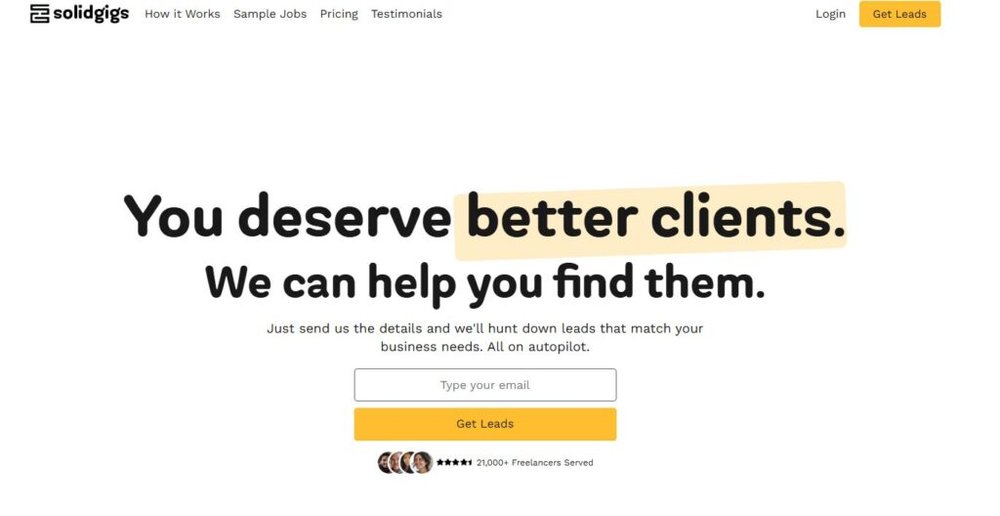
If Fiverr feels overwhelming with too many freelancers chasing too few clients, SolidGigs takes the opposite approach. Instead of waiting for clients to find you, SolidGigs finds clients for you—and sends you the best freelance job leads directly.
Think of it as a premium freelance job filter designed to save time and cut through the noise.
How SolidGigs Delivers Pre-Vetted Freelance Opportunities
SolidGigs works on a simple idea: freelancers shouldn’t have to waste hours searching for work.
Their team handpicks 50–100 top-quality freelance leads each week from across the internet, covering industries like writing, design, programming, and marketing.
These leads come from platforms like:
The team reviews thousands of listings and only forwards the ones that meet specific criteria (fair pay, reputable companies, real contracts). You then receive those leads by email or inside the SolidGigs dashboard.
It’s basically like having a personal assistant hunting freelance work for you.
Why It Saves Time Compared to Fiverr’s Open Marketplace
Fiverr’s model requires constant visibility—you need to optimize gigs, gather reviews, and compete for attention. SolidGigs flips that on its head. You don’t sell gigs at all. You simply apply directly to curated opportunities that match your skills.
In practice, that means:
- No SEO or keyword games.
- No racing to underbid others.
- No waiting for clients to find you.
You wake up to new, ready-to-apply leads in your inbox. That time savings alone can translate into extra billable hours or more energy for client projects.
As someone who’s freelanced for years, I’d say SolidGigs is perfect for experienced professionals who want to streamline client acquisition and focus on doing great work.
How Freelancers Can Build a Consistent Income Stream
SolidGigs isn’t just about leads—it’s also a training and resource platform. Subscribers gain access to a library of templates, negotiation scripts, and mini-courses from experts like Seth Godin and Paul Jarvis.
Here’s how I recommend using it to build stability:
- Set a weekly routine to apply to 5–10 leads consistently.
- Use the proposal templates in their library to personalize pitches.
- Track which industries or job types respond best and double down.
By focusing on quality over quantity, freelancers often report landing clients within the first few weeks. I’ve seen it especially benefit content writers and developers who are tired of Fiverr’s volume-based hustle.
When SolidGigs Is Worth the Monthly Subscription
SolidGigs costs around $35 per month, and while that may seem steep at first, it quickly pays off if you land even one decent client.
It’s a smart investment when:
- You’re short on time and can’t sift through endless job boards.
- You prefer quality over quantity.
- You already have experience but need a consistent flow of opportunities.
In my opinion, SolidGigs is ideal for freelancers who value focus, predictability, and simplicity—it helps you spend less time marketing yourself and more time earning.
Expert Tip: How to Choose the Right Website Like Fiverr
Now that we’ve covered a range of Fiverr alternatives—from budget-friendly platforms like Truelancer to premium ones like Toptal and curated systems like FlexJobs—it’s important to choose the one that truly fits your goals.
I like to think of it as matchmaking—you’re not just picking a platform; you’re choosing a work lifestyle.
Identify Your Needs Before Choosing a Platform
Before signing up anywhere, ask yourself:
- Do you want quick gigs or stable contracts?
- Are you looking for creative work, technical work, or physical tasks?
- How much time can you dedicate each week?
If your goal is flexibility and instant cash flow, Fiverr or Truelancer might be perfect. But if you’re seeking structure and predictability, FlexJobs or Upwork are smarter long-term choices.
Knowing your priorities helps you avoid spreading yourself thin across multiple platforms.
Compare Commission Fees, Talent Quality, and Support Options
Every platform has trade-offs. Fiverr takes 20% of every transaction, while Guru’s fees can drop as low as 5%. Toptal and 99designs charge more but deliver top-tier professionalism.
I suggest making a simple comparison chart of:
- Commission rates
- Payment protection
- Client support quality
- Freelancer verification systems
This small step helps you clearly see which site aligns best with your workflow and financial goals.
Start Small With One Platform Before Expanding
It’s tempting to join every platform at once—but don’t. You’ll burn out faster that way. Instead, start with one that matches your immediate needs and build a strong reputation there first.
Once you’ve established a few steady clients or good reviews, you can expand to other sites confidently. I always advise freelancers to master one platform before chasing the next.
Track Your ROI and Freelance Success Metrics
Whether you’re a client or freelancer, keep track of your return on investment (ROI). Measure things like:
- Average project value
- Hours saved on admin or lead generation
- Repeat client rate
I personally use a simple spreadsheet to track these numbers—it helps me see which platform is worth my time. Fiverr might give you volume, but a site like SolidGigs or FlexJobs might deliver higher value per hour worked.

I’m Juxhin, the voice behind The Justifiable.
I’ve spent 6+ years building blogs, managing affiliate campaigns, and testing the messy world of online business. Here, I cut the fluff and share the strategies that actually move the needle — so you can build income that’s sustainable, not speculative.