
Table of Contents
Some links on The Justifiable are affiliate links, meaning we may earn a small commission at no extra cost to you. Read full disclaimer.
When I first heard about Salehoo suppliers, I was skeptical. Could an online directory really help small businesses find reliable product partners in a sea of scams and unreliable sources?
The truth is, if you know how to use Salehoo strategically, it can open doors to thousands of vetted, trustworthy suppliers across nearly every niche.
In this guide, I’ll walk you through exactly how to identify, evaluate, and connect with the best Salehoo suppliers for your business—without wasting time or money on trial and error.
Understanding What Salehoo Suppliers Really Are
Before diving into products and partnerships, it helps to understand what Salehoo suppliers actually do and why they’ve become a trusted resource for online sellers.
What Makes Salehoo Different From Other Supplier Directories
Salehoo isn’t just a random list of suppliers—it’s a vetted directory built specifically for ecommerce sellers.
Unlike platforms like Alibaba, which allow almost anyone to list their business, Salehoo manually reviews each supplier before approval.
This matters because it filters out middlemen and fake wholesalers, giving you direct access to real suppliers.
From what I’ve seen, Salehoo’s strength lies in its balance between accessibility and reliability. It’s designed for new sellers who want trusted suppliers without needing to commit to huge bulk orders.
Why it’s different:
- Every supplier goes through a verification process.
- Listings include transparent contact details and business information.
- You can filter suppliers by region, product category, or shipping capability.
- The support team provides guidance if you’re unsure where to start.
In short, Salehoo focuses on trust and simplicity—qualities that most new ecommerce entrepreneurs need when starting out.
How Salehoo Vets and Verifies Each Supplier for Quality
Salehoo’s verification process is one of its biggest advantages. The team doesn’t just check if a business exists; they look at how it operates.
Here’s how it works step by step:
- Business Verification: Salehoo confirms the supplier’s registration details, ownership, and operational address.
- Performance Check: They evaluate the supplier’s fulfillment speed, communication responsiveness, and complaint history.
- Product Review: Samples are sometimes requested to ensure product quality aligns with claims.
- Ongoing Monitoring: Suppliers are periodically reviewed to maintain trust standards.
I’ve seen plenty of sellers rely on this process to avoid common ecommerce pitfalls—like paying upfront to a non-existent company. It’s this due diligence that makes Salehoo stand out as a supplier directory, not just a search tool.
The Types of Suppliers You Can Find on Salehoo (Wholesale, Dropship, Private Label)
Salehoo supports different business models, which is a big plus depending on how you sell:
- Wholesale suppliers: Perfect if you want to buy in bulk and manage your own inventory. Great for Amazon FBA sellers or those running independent stores.
- Dropshipping suppliers: Ideal for new sellers. You don’t buy stock upfront; instead, your supplier ships directly to your customers.
- Private label suppliers: For those wanting to create a brand. These suppliers let you customize products with your own logo and packaging.
Each type comes with its own pros and cons, but Salehoo makes it easy to identify them using search filters. You can even see which suppliers support international shipping or offer sample orders before committing.
Key Benefits of Working with Verified Salehoo Suppliers
Working with Salehoo suppliers saves time, reduces risk, and builds confidence—especially if you’re new to ecommerce.
Here’s what makes it worth your while:
- Fewer scams: Verification means less guesswork and safer transactions.
- Faster setup: You can connect with legitimate suppliers within minutes.
- Stronger support: Salehoo’s team and community forums provide advice when issues arise.
- Better margins: Wholesale prices often beat what you’d find on unverified platforms.
One underrated benefit? Peace of mind. Knowing your supplier is real lets you focus on marketing, branding, and growth instead of worrying about the reliability of your source.
How to Use Salehoo to Find Reliable Suppliers
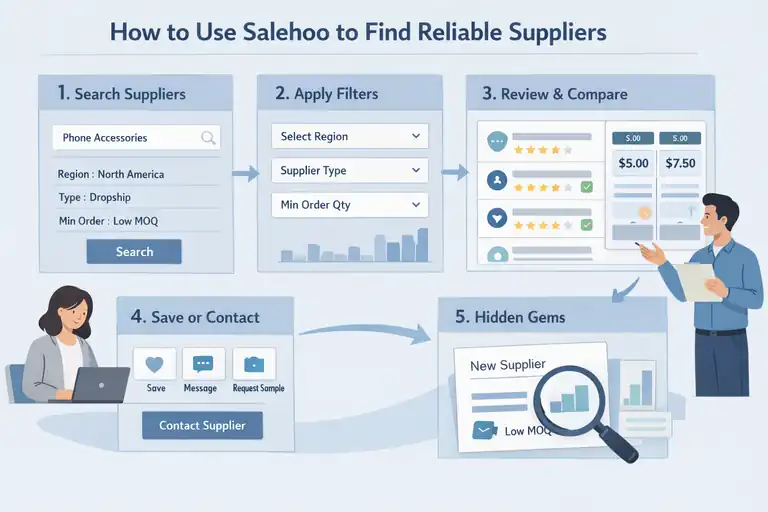
Finding reliable Salehoo suppliers isn’t hard—it’s about knowing how to use the directory’s features effectively.
Step-By-Step Guide to Navigating the Salehoo Directory
Let me break it down for you in simple steps:
- Log in and go to the “Suppliers” section.
- Enter your product keyword. For example, “phone accessories” or “organic skincare.”
- Apply filters. Choose your region, business type (wholesale, dropship), and minimum order requirements.
- Review results. Look for suppliers with high ratings, fast response times, and complete contact details.
- Save or contact suppliers directly. You can message them to ask for samples or catalogues.
Salehoo’s layout is beginner-friendly. You can even bookmark suppliers to compare them later—something I always do before reaching out.
How to Filter and Compare Suppliers Based on Product Type and Region
Filtering suppliers properly can make or break your sourcing process.
Here’s what works best:
- Filter by product category: Narrow down suppliers to those specializing in your exact niche.
- Select by region: Choose domestic suppliers if you need faster delivery times.
- Check order size: Some suppliers allow small MOQ (minimum order quantity), which is perfect for testing products.
- Compare pricing: Always compare wholesale versus dropship options for the same category.
For example, if you’re based in the U.S., start by choosing “North America” as your region. This not only saves on shipping costs but also improves delivery reliability for customers.
Tips for Spotting Hidden High-Value Suppliers on Salehoo
Not all great suppliers rank at the top of search results. Some smaller, newer suppliers can offer better margins and flexibility.
Here’s what I do to find them:
- Sort by newest first: New suppliers often have competitive pricing to attract clients.
- Look beyond the first page: Many reliable suppliers don’t have large advertising budgets.
- Contact multiple suppliers: Even two suppliers in the same category can vary in pricing by 20–30%.
- Ask about customization: A supplier willing to brand or bundle products is often more partnership-oriented.
These little steps can uncover suppliers that most people overlook.
Mistakes to Avoid When Searching for Salehoo Suppliers
Even on a safe platform like Salehoo, there are pitfalls. Avoiding these can save you time and frustration.
Common mistakes to watch out for:
- Relying solely on ratings: Always message a supplier before placing orders.
- Ignoring shipping policies: Make sure you know how returns, replacements, and delays are handled.
- Skipping verification details: Confirm contact information and test communication speed.
- Focusing only on price: The cheapest option can cost more later if product quality is poor.
In my experience, taking the time to build a relationship early on leads to fewer surprises down the line.
Evaluating Salehoo Suppliers Before Partnering
Even with Salehoo’s vetting process, your own evaluation matters. Think of Salehoo as your starting point, not your final guarantee.
Essential Criteria to Check Before Contacting a Supplier
Before you reach out, confirm these details:
- Product range: Does the supplier carry enough variety for your niche?
- MOQ and pricing: Are they flexible with small orders for new businesses?
- Shipping options: Can they handle both domestic and international orders?
- Payment security: Check accepted payment methods—PayPal or credit card protection is best.
These basics help ensure your supplier is not only legitimate but also compatible with your business model.
How to Read Supplier Ratings, Reviews, and Verification Status
Salehoo’s supplier listings show ratings and verification status. But it’s what you do with that information that counts.
- High rating + recent reviews: Great sign of active, reliable performance.
- Older reviews or inactive listings: Approach cautiously. Contact them to confirm they’re still active.
- Verification badge: This means Salehoo has confirmed their business registration and authenticity.
Always combine ratings with direct communication. I’ve seen suppliers with average ratings turn out to be excellent partners simply because they’re newer and haven’t built up many reviews yet.
Questions to Ask Salehoo Suppliers Before You Commit
Good communication is half the battle. Here are questions I always recommend asking:
- What are your minimum order requirements?
- Can you provide sample products before bulk purchase?
- What are your lead times for production and delivery?
- How do you handle product defects or customer returns?
- Do you offer customization or private labeling?
Their answers will tell you a lot about their professionalism and reliability. If they respond clearly and quickly, that’s usually a good sign.
Red Flags That Indicate an Unreliable Supplier
While Salehoo does a good job screening suppliers, it’s still smart to stay alert.
Watch out for these warning signs:
- Poor communication or delayed responses.
- Unwillingness to provide a sample or documentation.
- Hidden fees or unclear pricing terms.
- Negative or outdated reviews that never get addressed.
- Requests for full upfront payment without protection.
If something feels off, it probably is. Move on and focus on suppliers who communicate openly and provide clear information.
Building Strong Relationships with Salehoo Suppliers
Once you’ve found the right Salehoo suppliers, your next step is building a real working relationship—not just placing orders.
Strong partnerships lead to better pricing, faster communication, and long-term business stability.
How to Communicate Professionally and Build Trust Early
Your first message to a supplier sets the tone for everything that follows. Think of it as your digital handshake.
Start by introducing yourself clearly: mention your business name, the products you sell, and what you’re looking for. Be polite, concise, and professional—but keep it human.
Suppliers deal with hundreds of automated inquiries, so sounding like a real person helps you stand out.
A good first message might include:
- A short intro about your store and audience.
- The specific products or categories you’re interested in.
- Questions about pricing, shipping, and minimum order quantities (MOQs).
- Your preferred communication method and time zone.
Consistency builds trust. If you say you’ll follow up tomorrow, do it. In my experience, reliability often matters more to suppliers than the size of your first order.
They’re more likely to offer you better deals later when they know you’re serious and respectful of their time.
Negotiation Tips for Better Pricing and Terms
Negotiation isn’t about haggling—it’s about creating a win-win deal. Salehoo suppliers expect some discussion around pricing, but the key is to be respectful and informed.
Here’s how I approach it:
- Do your research first. Check average wholesale prices on other platforms to understand the market range.
- Start with smaller asks. Instead of asking for a huge discount, request free samples, reduced MOQs, or better shipping terms.
- Offer commitment in return. Let the supplier know you plan to reorder regularly if the first batch sells well.
- Negotiate value, not just price. Sometimes faster shipping or flexible payment terms matter more than a small price cut.
A supplier who sees you as a partner, not just a buyer, is more likely to invest in your success. I’ve had suppliers voluntarily offer early access to new products simply because we built mutual trust.
Managing Expectations and Setting Clear Agreements
Before placing your first order, make sure every important detail is clearly documented. This prevents misunderstandings later.
What to confirm in writing:
- Product details (including materials, packaging, and color variations).
- Pricing per unit and total cost.
- Payment terms and accepted methods.
- Shipping timelines and tracking responsibilities.
- Return and refund policies.
If possible, request a proforma invoice—a simple document summarizing all order details before production starts. I’ve learned the hard way that assumptions can be expensive. Written agreements keep both parties accountable and avoid miscommunication.
How to Handle Issues or Conflicts with a Salehoo Supplier
Even with reliable Salehoo suppliers, occasional issues happen—like delays or damaged shipments. What matters most is how you handle them.
- Stay calm and professional. Reacting emotionally can make a supplier defensive.
- Provide evidence. Include photos or documentation of the problem.
- Propose a clear solution. Whether it’s a replacement, partial refund, or credit for future orders, be specific.
- Loop in Salehoo support if needed. Their team can help mediate if things stall.
Most suppliers value long-term business, so they’ll work to fix issues quickly. Handling conflicts with patience and clarity often strengthens the relationship rather than breaking it.
Top Niches and Product Categories for Salehoo Suppliers
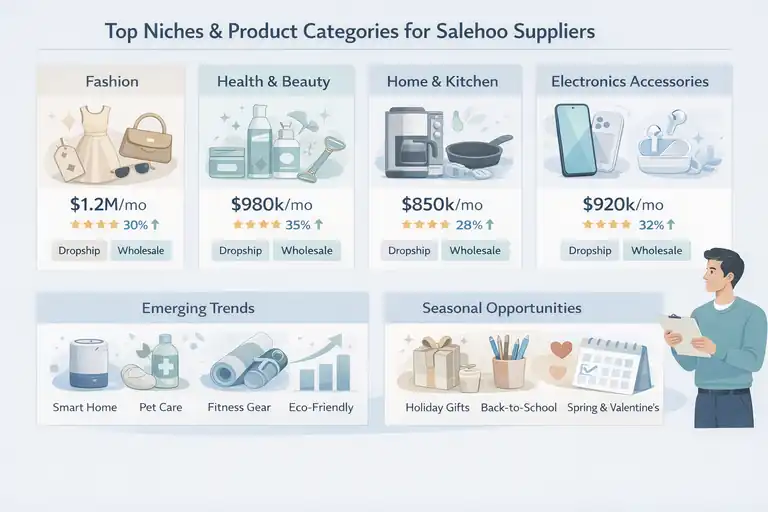
Salehoo’s supplier network covers thousands of products, but some niches consistently outperform others. The key is knowing which ones fit your brand and target audience.
Best-Selling Categories and Why They Perform Well
Based on Salehoo’s data and community reports, certain categories stand out for both profitability and steady demand:
- Fashion and apparel: Always in demand, easy to update seasonally.
- Health and beauty: Products like skincare tools, supplements, and organic cosmetics have loyal repeat buyers.
- Home and kitchen goods: Affordable and practical, perfect for everyday consumers.
- Electronics accessories: Fast-moving items like phone cases and smart device add-ons.
These categories perform well because they balance popularity with manageable competition. Plus, many Salehoo suppliers in these niches offer dropshipping options, making them beginner-friendly.
How to Match Your Business Niche with the Right Suppliers
Choosing suppliers that fit your niche isn’t just about products—it’s about alignment.
Here’s what I look for:
- Product specialization: A supplier focused on one category often provides higher-quality products.
- Shipping regions: Match supplier locations to where your customers live for faster delivery.
- Scalability: Make sure your supplier can grow with you as demand increases.
For example, if you run a sustainable lifestyle brand, look for suppliers that offer eco-friendly materials and minimal packaging. Aligning values makes your brand message stronger and your supplier relationship smoother.
Emerging Product Trends to Watch on Salehoo
Ecommerce moves fast, and Salehoo regularly updates its product insights to help sellers stay ahead. Some trending product areas right now include:
- Smart home devices and accessories.
- Pet care items, especially premium grooming tools.
- Fitness and wellness gear for home workouts.
- Eco-conscious household items, like reusable kitchenware.
When testing new products, order small batches first to validate demand. I’ve seen sellers succeed by combining trend-driven products with evergreen staples to balance risk.
Seasonal Opportunities for Maximizing Supplier Relationships
Timing can multiply your profits if you plan ahead. Most Salehoo suppliers appreciate early seasonal orders because it helps them manage inventory better.
Examples of strong seasonal timing:
- Holiday gift items (start sourcing in early fall).
- Back-to-school products (order by mid-summer).
- Valentine’s and Mother’s Day collections (source at least two months prior).
By ordering early, you also build goodwill with suppliers. Many offer priority access to limited-stock products for reliable buyers—a small but powerful advantage in competitive niches.
Comparing Salehoo Suppliers with Alternatives
Salehoo isn’t the only platform for sourcing products, but it stands out for its reliability and ease of use.
Let’s look at how it stacks up against others.
Salehoo vs. Alibaba: Which Is Better for Small Businesses?
Alibaba has scale; Salehoo has simplicity.
- Alibaba connects you directly with manufacturers, often in China. It’s great for large-scale sourcing but can be overwhelming for beginners.
- Salehoo focuses on verified suppliers, many with smaller minimum order quantities and English-speaking support.
If you’re just starting or want dropshipping-friendly suppliers, Salehoo usually makes more sense. For experienced importers seeking bulk manufacturing, Alibaba might offer better customization.
In my experience, many successful sellers actually use both—Salehoo to start safely, Alibaba later for scaling production.
Salehoo vs. Worldwide Brands: Key Differences in Supplier Quality
Both Salehoo and Worldwide Brands focus on verified suppliers, but they differ in usability and approach.
- Salehoo: Curated directory with real-time updates and educational resources.
- Worldwide Brands: Massive database, but sometimes feels outdated and harder to navigate.
Salehoo’s modern interface and community tools make it better suited for newer ecommerce owners. Worldwide Brands, on the other hand, appeals to sellers who prefer sheer volume of listings over guided discovery.
Pros and Cons of Using Salehoo Compared to Other Platforms
Pros:
- Verified, trusted suppliers.
- Lower risk of scams.
- User-friendly dashboard.
- Access to community insights and product trends.
Cons:
- Smaller directory compared to open platforms.
- Limited advanced manufacturer options.
- Annual membership fee (though it’s reasonable for what you get).
Overall, Salehoo’s tradeoff between quality and quantity works well for small to mid-size online stores that value stability.
When It Makes Sense to Combine Salehoo with Other Supplier Tools
You don’t have to stick to one platform. Combining tools can give you the best of both worlds.
For instance:
- Use Salehoo for verified dropshipping suppliers.
- Use CJ Dropshipping for scaling production and private labeling.
- Use Google Trends and Salehoo Labs to validate product ideas before contacting suppliers.
This hybrid approach lets you grow safely while still taking advantage of wider sourcing options. I personally recommend starting with Salehoo, then expanding outward once your business gains traction.
Pro Tips for Getting the Most Out of Salehoo
Once you’ve found your footing with Salehoo suppliers, the next step is learning how to maximize those relationships.
A few smart strategies can make a big difference in efficiency, profit, and growth potential.
How to Build Long-Term Partnerships for Repeat Orders
Strong supplier relationships aren’t built overnight—they develop through consistency, respect, and communication.
Start by treating your supplier as a business partner, not just a vendor. That means sharing updates about your growth, future order plans, and even customer feedback.
Most suppliers appreciate transparency because it helps them plan inventory and forecast demand.
What helps build trust over time:
- Pay on time, every time.
- Provide constructive feedback, not just complaints.
- Order consistently, even if it’s in small batches.
- Stay in touch between orders—don’t just contact them when you need something.
I’ve noticed that reliable buyers often get early access to new product lines or discounted bulk pricing. It’s a simple reminder that loyalty works both ways.
Using Salehoo’s Research Lab to Validate Product Ideas
One of Salehoo’s most underrated tools is its Research Lab—a feature that shows trending products and market demand data.
It helps answer an essential question: Will this product actually sell?
Here’s how to use it effectively:
- Go to the Research Lab dashboard and search for your niche or product idea.
- Review data like average price, competition level, and supplier count.
- Look for products with moderate competition but steady demand.
- Cross-check product reviews on marketplaces like eBay or Amazon.
For example, if you’re considering selling eco-friendly kitchen items, the Research Lab can show you which specific items (like reusable wraps or bamboo utensils) are trending upward.
This prevents you from wasting time on products that look good on paper but don’t actually sell.
Strategies for Scaling Your Business with Multiple Salehoo Suppliers
When your store starts growing, relying on one supplier can become risky. Expanding to multiple Salehoo suppliers helps you scale smoothly and protect against delays or stock shortages.
Smart scaling strategies:
- Partner with two or three suppliers offering similar products.
- Diversify product types within your niche to reach different buyer segments.
- Use a mix of dropshipping and wholesale to balance flexibility and profit margins.
- Track each supplier’s performance—delivery times, product quality, and communication.
In my experience, scaling works best when you grow gradually. Start by testing a second supplier with one product line before expanding further. This way, you maintain quality while increasing capacity.
How to Save Time and Money When Managing Supplier Relationships
Managing multiple suppliers can get overwhelming fast. The trick is to stay organized and streamline your workflow.
A few time-saving habits that make a big impact:
- Create a shared spreadsheet to track all supplier contacts, product SKUs, and order statuses.
- Use email templates for recurring communication, like restock requests or follow-ups.
- Group orders strategically to save on shipping costs.
- Negotiate long-term rates once you’ve built trust.
One tip I swear by is scheduling a quick monthly check-in with key suppliers. Even a five-minute conversation can prevent small issues from becoming costly problems later.
Common Challenges When Working with Salehoo Suppliers
Even when you’re working with verified Salehoo suppliers, challenges are bound to come up. The good news is, most of them have simple, practical fixes.
Dealing with Slow Responses or Limited Inventory
Sometimes suppliers take longer to reply, especially during high-demand seasons. Instead of getting frustrated, plan ahead and set communication expectations early.
- Ask for preferred contact times or alternative communication channels.
- Keep messages clear and focused—avoid sending multiple requests at once.
- Place reorders before stock runs low to give suppliers enough lead time.
If slow responses persist, politely ask whether they’re facing operational issues. Most are upfront about it, and you can adjust your plan accordingly.
Managing Shipping Times and International Logistics
Shipping delays are one of the biggest pain points in ecommerce. They can stem from customs checks, logistics partners, or simple distance.
To minimize shipping issues:
- Choose suppliers with warehouses closer to your customers when possible.
- Ask for tracking numbers and estimated delivery windows before purchase.
- Communicate realistic shipping times on your store page.
- Build a small buffer into your promised delivery times.
I once worked with a supplier in China who offered a U.S. warehouse option—it cost slightly more per item but cut delivery time by two weeks. Sometimes, paying a little extra is worth the reliability.
Overcoming Price Competition and Finding Unique Products
It’s tempting to compete on price, but that rarely works long-term. Instead, focus on differentiation—either through branding, bundling, or niche targeting.
Here’s what helps:
- Bundle complementary products (like yoga mats and straps).
- Create unique product descriptions and packaging.
- Target specific sub-niches rather than broad categories.
Salehoo’s supplier network includes smaller vendors who can customize or private label products. Those small touches can make your store stand out in a crowded market.
How to Transition If a Supplier Stops Performing
If a supplier consistently fails to deliver on time or quality drops, it’s time to move on.
Steps to handle it smoothly:
- Communicate concerns clearly and give them one chance to fix the issue.
- Start testing a replacement supplier while maintaining current operations.
- Gradually shift orders once the new supplier proves reliable.
- Inform customers if changes affect shipping or inventory.
Never burn bridges, though. I’ve seen suppliers improve dramatically after a clear, honest conversation. But if they don’t, your business must come first.
How to Ensure Long-Term Success with Salehoo Suppliers
Sustaining success with Salehoo suppliers is about building systems, not just relationships. The more organized your approach, the smoother your operations become.
Setting Up Reliable Systems for Supplier Management
Good supplier management is built on structure. Start by organizing all supplier data in one place—emails, invoices, and contracts.
Use tools like Google Sheets, Airtable, or even a simple CRM to track communication and delivery patterns. Label suppliers by reliability, product quality, and pricing trends.
Automation helps too. For example, you can set reminders for reorder dates or supplier reviews so nothing slips through the cracks. Small operational tweaks like these often free up hours each week.
Tracking and Reviewing Supplier Performance Regularly
Treat supplier reviews like employee evaluations. Regular feedback keeps your partnerships healthy.
Metrics to track:
- On-time delivery rate.
- Defect or return percentage.
- Communication speed.
- Price consistency over time.
If a supplier’s performance dips, discuss it right away. I usually do quarterly check-ins where I share both compliments and constructive notes. Most suppliers appreciate transparency—it shows you’re invested in mutual growth.
When to Replace or Diversify Your Supplier Base
Even with strong relationships, it’s smart to keep your options open. Market conditions change, and a supplier who’s great today might struggle tomorrow.
Diversify before you need to. Test backup suppliers every few months, especially for your best-selling products. That way, you’re not scrambling if someone runs out of stock or raises prices unexpectedly.
It’s not disloyal—it’s strategic. Think of it as insurance for your business stability.
Building a Reputation as a Preferred Buyer on Salehoo
Suppliers notice consistent, respectful buyers. Being known as a dependable partner gives you leverage and trust.
Ways to stand out:
- Communicate clearly and professionally.
- Keep promises on order timelines and payments.
- Share positive feedback or testimonials when suppliers perform well.
I’ve had suppliers prioritize my orders during peak seasons simply because I maintained good communication and paid on time. Reliability pays dividends over time.
Final Takeaway: Turning Salehoo Suppliers into Business Partners
At the end of the day, success on Salehoo isn’t just about sourcing products—it’s about building meaningful partnerships that fuel growth and stability.
How to Shift from Transactional to Strategic Partnerships
Shift your mindset from buyer-seller to business partners. That means involving your suppliers in your success.
Share feedback, growth plans, and even insights from your market. Many suppliers can offer suggestions for new products or improvements if they understand your goals. Collaboration often leads to better opportunities than negotiation alone.
Why Consistency and Communication Are the Real Growth Factors
Consistency builds trust; communication keeps it alive. Suppliers want to work with sellers who are reliable, respectful, and transparent.
Even a short monthly update can make a difference—let them know what’s selling well, what’s not, and what you plan to restock soon. Over time, this level of communication turns a basic supplier relationship into a real partnership.
Lessons Learned from Experienced Salehoo Users
From what I’ve seen, the most successful Salehoo users share a few common habits:
- They take time to test suppliers before committing.
- They treat every supplier like a long-term partner, not a short-term transaction.
- They use Salehoo’s tools—like the Research Lab—to stay informed and adaptable.
These habits compound over time, helping businesses scale without unnecessary risk.
Expert Tip: The Right Way to Build Supplier Loyalty Over Time
If I could give you one piece of advice, it would be this: loyalty is earned through reliability, not volume.
Start small, stay consistent, communicate clearly, and always pay on time. Over time, your suppliers will see you as more than just another buyer—they’ll see you as a trusted partner worth prioritizing.
And when that happens, everything—from pricing to product availability—gets easier. That’s the real power of working with Salehoo suppliers.
Frequently Asked Questions
What are Salehoo suppliers?
Salehoo suppliers are pre-vetted wholesale and dropshipping partners listed in the Salehoo directory, reviewed for legitimacy, reliability, and business credibility.
Are Salehoo suppliers safe to use for beginners?
Yes. Salehoo suppliers are screened to reduce scams, making them a safer choice for beginners starting ecommerce or dropshipping businesses.
How do I choose the best Salehoo supplier for my business?
Compare Salehoo suppliers based on product fit, shipping location, minimum order requirements, communication speed, and long-term scalability.

I’m Juxhin, the voice behind The Justifiable.
I’ve spent 6+ years building blogs, managing affiliate campaigns, and testing the messy world of online business. Here, I cut the fluff and share the strategies that actually move the needle — so you can build income that’s sustainable, not speculative.
Related posts:
 Salehoo Supplier List for High-Profit Winning Products
 Advantages of a Dropshipping Company: Genuine Business Knowledge
 How To Start A Dropshipping Business With No Money
 How to Use Dsers Shopify for Seamless Dropshipping
 Dropshipping Guide: Build a Store That Actually Sells
 Start Dropshipping Today: A Simple Guide for Complete Beginners